


Can AI and Digital Twins Improve Passive Fire Safety?
The construction industry is entering a new era of digital transformation where buildings are becoming smarter, more connected, and increasingly data-driven. Technologies such as Artificial Intelligence (AI), Building Information Modeling (BIM), Internet of Things (IoT), and Digital Twins are rapidly changing how buildings are designed, constructed, operated, and maintained. While these technologies are already influencing energy management, predictive maintenance, and smart infrastructure operations, they are now beginning to reshape one of the most critical areas of building safety passive fire protection.
Traditionally, passive fire protection has relied heavily on physical inspections, paper-based documentation, manual compliance tracking, and reactive maintenance practices. Fire-rated walls, firestop systems, fire doors, compartmentation barriers, and structural fireproofing are often hidden behind walls, ceilings, and service shafts, making long-term monitoring difficult. As buildings become more complex and infrastructure systems become increasingly interconnected, maintaining passive fire integrity throughout a building’s lifecycle has become a major challenge. This is where AI and Digital Twin technologies are expected to play a transformative role.
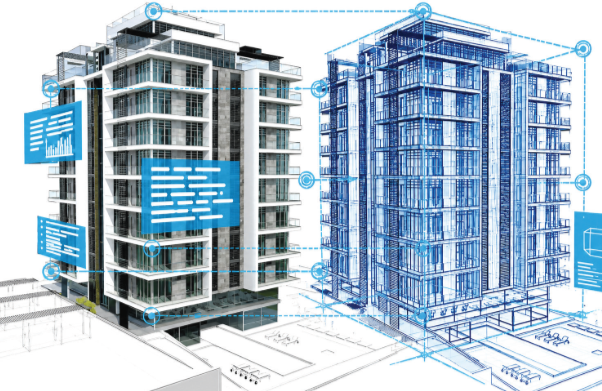
A Digital Twin is a dynamic digital replica of a physical building or infrastructure asset that continuously integrates real-world data from sensors, systems, inspections, and operational activities. Unlike static 3D models, Digital Twins create live, continuously updated environments that reflect actual building conditions in real time. When combined with AI-driven analytics, these systems can provide powerful new capabilities for monitoring, managing, and improving passive fire safety.
One of the biggest challenges in passive fire protection is maintaining fire compartmentation integrity over time. During construction, buildings may initially comply with fire safety requirements, but over the years, renovations, cable installations, service modifications, maintenance activities, and undocumented penetrations can compromise compartmentation systems. Small breaches in fire-rated walls or floors often remain unnoticed until inspections occur or worse, until a fire emergency exposes the failure.
Digital Twins offer a more intelligent approach to managing this problem. By integrating BIM data, firestop locations, fire-rated assemblies, service penetrations, and inspection records into a centralized digital platform, facility managers can maintain a continuously updated map of passive fire systems throughout the building lifecycle.
AI can further enhance this process by analyzing large amounts of building data and identifying patterns or anomalies that may indicate fire safety risks. For example, AI systems could automatically flag unsealed penetrations, missing firestop documentation, damaged fire doors, or inconsistencies between installed systems and approved designs. This reduces dependence on purely manual inspections and improves compliance accuracy.
Smart inspection technologies are already beginning to influence passive fire management. Mobile inspection platforms connected to Digital Twin systems allow inspectors to scan QR-coded firestop systems, upload site photos, track maintenance history, and verify certification details directly within a digital environment. AI-assisted image recognition may eventually help identify visible compartmentation defects automatically during inspections.
Another major advantage of Digital Twins is improved lifecycle traceability. Passive fire protection systems are often difficult to manage because documentation becomes fragmented over time. Drawings may become outdated, firestop modifications may not be recorded, and maintenance histories can be incomplete. Digital Twin platforms centralize this information into a single coordinated system that remains accessible throughout the operational life of the building.
This capability becomes particularly valuable in large and complex infrastructure such as airports, hospitals, data centers, metro systems, industrial plants, and high-rise developments where thousands of fire-rated penetrations and compartment boundaries must be monitored continuously.
AI also has significant potential in predictive maintenance for passive fire systems. Instead of relying solely on scheduled inspections, intelligent algorithms could analyze environmental conditions, maintenance records, occupancy patterns, vibration data, moisture exposure, and operational activities to predict where passive fire systems may deteriorate or fail over time.
For example, AI could identify high-risk areas exposed to repeated cable modifications, excessive humidity, structural movement, or heavy maintenance activity. Facility managers could then prioritize inspections and repairs proactively before compliance issues become critical.
Environmental monitoring integrated into Digital Twins can also improve passive fire resilience. Sensors installed within buildings can track temperature changes, moisture intrusion, vibration levels, air pressure differentials, and smoke movement conditions that may affect fire-rated assemblies. AI systems can process this data continuously and provide early warnings if compartmentation systems may be compromised.
In high-rise buildings, AI-powered evacuation modeling may further improve fire safety planning. By combining real-time occupancy data, smoke movement analysis, and compartmentation performance models, Digital Twins could simulate evacuation scenarios dynamically during emergencies. This may help emergency responders make faster and more informed decisions under critical conditions.
Data centers represent another area where AI and Digital Twins are expected to significantly influence passive fire safety. These facilities contain dense cabling infrastructure, critical electrical systems, battery storage, and highly sensitive operations where even small fires can create major operational disruption. Digital Twins can help track firestop penetrations, monitor compartment integrity, and support predictive risk analysis throughout the facility lifecycle.
Industrial infrastructure may benefit even further. Oil and gas facilities, power plants, manufacturing plants, and transportation infrastructure operate under harsh environmental conditions where passive fire systems are exposed to corrosion, vibration, chemicals, and extreme temperatures. AI-driven predictive maintenance could help identify hidden degradation risks that traditional inspection methods may miss.
Despite their potential, AI and Digital Twin technologies also face several challenges in passive fire applications. One major issue is data quality. Digital systems are only as accurate as the information entered into them. Incomplete documentation, outdated BIM models, inconsistent inspections, or poor data management can limit the effectiveness of intelligent fire safety platforms.
Another challenge is industry adoption. Many construction and facility management organizations still rely heavily on traditional paper-based processes and fragmented workflows. Transitioning toward fully integrated digital fire management systems requires investment, technical expertise, and organizational change.
Cybersecurity also becomes an important consideration as buildings become increasingly connected. Digital Twins managing critical life-safety infrastructure must be protected against data breaches, system failures, and unauthorized access.
Importantly, AI and Digital Twins should not be viewed as replacements for fire engineers, inspectors, or passive fire specialists. Instead, they are tools that can enhance decision-making, improve visibility, strengthen compliance management, and support more proactive maintenance strategies.
Regulatory authorities and insurers are also beginning to recognize the value of digital compliance tracking and lifecycle documentation. In the future, digital fire safety records and AI-supported inspection systems may become standard requirements for high-risk infrastructure and large commercial developments.
In India, rapid urbanization, smart city initiatives, data center growth, and high-rise construction are creating strong opportunities for digital fire safety transformation. As infrastructure becomes more technologically advanced, maintaining passive fire integrity through conventional methods alone will become increasingly difficult. AI and Digital Twin technologies may therefore become essential tools for improving accountability, traceability, and long-term building resilience.
The future of passive fire protection is likely to become far more intelligent, connected, and predictive than it is today. Digital Twins may eventually provide real-time visibility into every fire-rated wall, penetration, fire door, and compartment within a building, while AI continuously analyzes risks and supports preventive action before failures occur.
Ultimately, passive fire safety has always depended on one key principle maintaining compartmentation integrity before a fire occurs. AI and Digital Twins now offer the possibility of monitoring and protecting that integrity more effectively than ever before.
As buildings continue to evolve into smarter and more complex environments, the integration of intelligent technologies into passive fire protection may become one of the most important advancements in future building safety.