



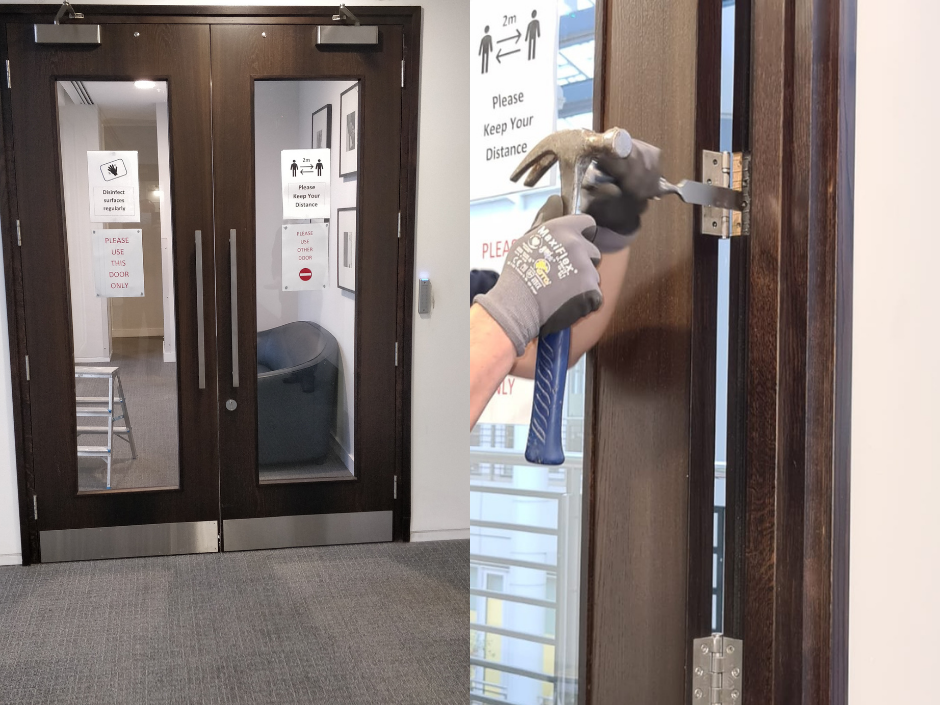
Closing the Loop: The High Stakes of Fire Door Inspection and Maintenance
In the architecture of life safety, few components are as critical yet as frequently abused as the humble fire door. Unlike active fire protection systems like sprinklers or smoke detectors, a fire door does not require power, sensors, or water pressure to do its job. It relies purely on its physical integrity, precise engineering, and correct installation. When fire breaks out, these assemblies serve as the primary barriers that contain toxic smoke, restrict the spread of flames, and preserve safe escape routes for building occupants.
Yet, in facilities across the globe, fire doors are routinely compromised. Propped open with wooden wedges, fitted with incorrect hardware, or neglected until their hinges sag, these lifesaving assets are frequently reduced to mere aesthetic panels. For facility managers, landlords, and safety officers, closing the loop on fire door inspection and maintenance is not just a regulatory obligation it is a high-stakes necessity where the cost of failure is measured in human lives.
The Anatomy of an Assembly: Why Tolerances Matter
To understand why fire doors fail, one must first appreciate that a fire door is not just a piece of wood or steel. It is a highly engineered, certified assembly comprising the door leaf, frame, hinges, locks, latches, closers, glazing, and seals. If any single component fails to perform, the entire system is compromised.
The margin for error in these assemblies is extraordinarily slim. Consider the "3mm rule." For a standard timber fire door to effectively restrict the passage of fire and smoke, the gap between the door leaf and the frame at the top and sides must typically be between 2mm and 4mm.
- Too wide a gap: Flames and superheated gases will breach the seal before the intumescent strips have time to activate and expand.
- Too narrow a gap: The door may bind against the frame during regular operation, failing to close fully when needed.
Similarly, the threshold gap at the bottom of the door must be strictly controlled, often requiring automatic drop seals to block low-level smoke transfer. These tight tolerances mean that routine building settling, heavy foot traffic, and atmospheric humidity can easily push a perfectly compliant door into non-compliance within a matter of months.
The Fatal Five: Common Fire Door Failures Exposed
During routine building safety audits, inspectors consistently encounter the same critical defects. Recognizing these "Fatal Five" failures is the first step toward establishing an effective maintenance regime:
1. Damaged or Missing Intumescent Seals
Intumescent strips, chemically engineered to expand up to 25 times their original size when exposed to heat, seal the gaps around the door. All too often, these strips are missing, damaged by cleaning equipment, or deliberately painted over by maintenance teams during cosmetic refurbishments. Painted or damaged seals lose their ability to react swiftly, rendering the door vulnerable to early breach.
2. Faulty Self-Closing Devices
A fire door is only effective if it is closed when a fire starts. Overhead door closers are frequently found disconnected, leaking hydraulic fluid, or adjusted so poorly that the door fails to overcome the resistance of the latch. Conversely, closers set with too much tension pose accessibility challenges, leading frustrated occupants to wedge the doors open.
3. Non-Compliant Hardware Substitution
When a lock or hinge breaks, maintenance staff frequently pull generic replacements from a workshop shelf. This is a critical error. Every piece of hardware on a fire door—from the hinges to the panic bars must be explicitly tested and certified for use on that specific door type. Installing an unrated hinge can lead to metal fatigue, sagging, and eventual failure under fire conditions.
4. Excessive Gaps and Warping
Due to heavy usage or environmental moisture, door leaves can warp or drop. Gaps exceeding 4mm at the top and sides, or exceeding 8mm to 10mm at the base (depending on whether smoke seals are present), allow smoke to rapidly infiltrate escape stairs and corridors long before flames reach the area.
5. Uncertified Glazing Repairs
Vision panels provide vital visibility for firefighters and escaping occupants. However, when these glass panels are cracked, they are sometimes replaced by standard laminated glass rather than specialist fire-rated glazing. Standard glass will shatter within minutes of fire exposure, creating an immediate breach in the compartment boundary.
Shifting from Reactive Repair to Proactive Maintenance
Relying on annual fire risk assessments to catch these defects is a dangerous strategy. A fire door in a busy hospital corridor or school stairwell can easily be damaged hours after an annual inspection, remaining broken for the next 364 days. Facilities must transition to a proactive, tiered maintenance model.
A robust framework involves three distinct layers of defense:
- Weekly Operational Checks: Frontline staff or security teams should perform rapid visual checks. Does the door close fully into the frame from any angle? Is it wedged open?
- Quarterly In-House Audits: Internal maintenance teams should measure gaps, verify that intumescent strips are intact, and inspect hardware for signs of wear or unapproved modifications.
- Annual Certified Inspections: A comprehensive, component-by-component inspection should be conducted by a certified independent fire door inspector to validate compliance and renew building safety records.
The Golden Thread: Digital Traceability
Modern facility management demands that safety records move beyond paper binders stuffed into basement filing cabinets. The industry is rapidly adopting the "Golden Thread" of informationa continuous, digital record of a building's safety assets from construction through its operational lifespan.
By implementing digital tagging systems, such as unique QR codes or RFID chips embedded directly into the door leaf, inspectors can scan a door with a smartphone to immediately view its full history. They can instantly verify its original fire rating, access manufacturer installation guides, view past repair logs, and document current defects with photographic evidence. This level of traceability ensures accountability, eliminates guesswork for maintenance teams, and provides landlords with an unassailable audit trail in the event of a regulatory investigation.
Conclusion: A Culture of Compliance
Closing the loop on fire door safety requires more than a checklist; it demands a cultural shift within facility management. Fire doors must be treated not as simple architectural openings, but as active life-safety machinery that requires precision calibration, certified parts, and continuous monitoring.
By enforcing strict gap tolerances, eliminating uncertified hardware fixes, and embracing digital tracking tools, building operators can transform these silent barriers into reliable protectors. In the high-stakes environment of structural fire safety, ensuring a door closes correctly is the ultimate deciding factor between a contained incident and a tragic disaster.