Trending
Directory
Time :





By Mr. Reji Bhami | Director | Eminent International Testing Centre
Fire safety cannot be judged by appearance, product claims or drawings alone. Fire resistance testing exposes building products and complete assemblies to controlled fire conditions and records how long they maintain stability, integrity and insulation. The resulting evidence helps prevent unverified systems from becoming hidden weaknesses in buildings and supports safer decisions throughout design, construction and product development.
Eminent Fire Testing and Research Laboratory Private Limited
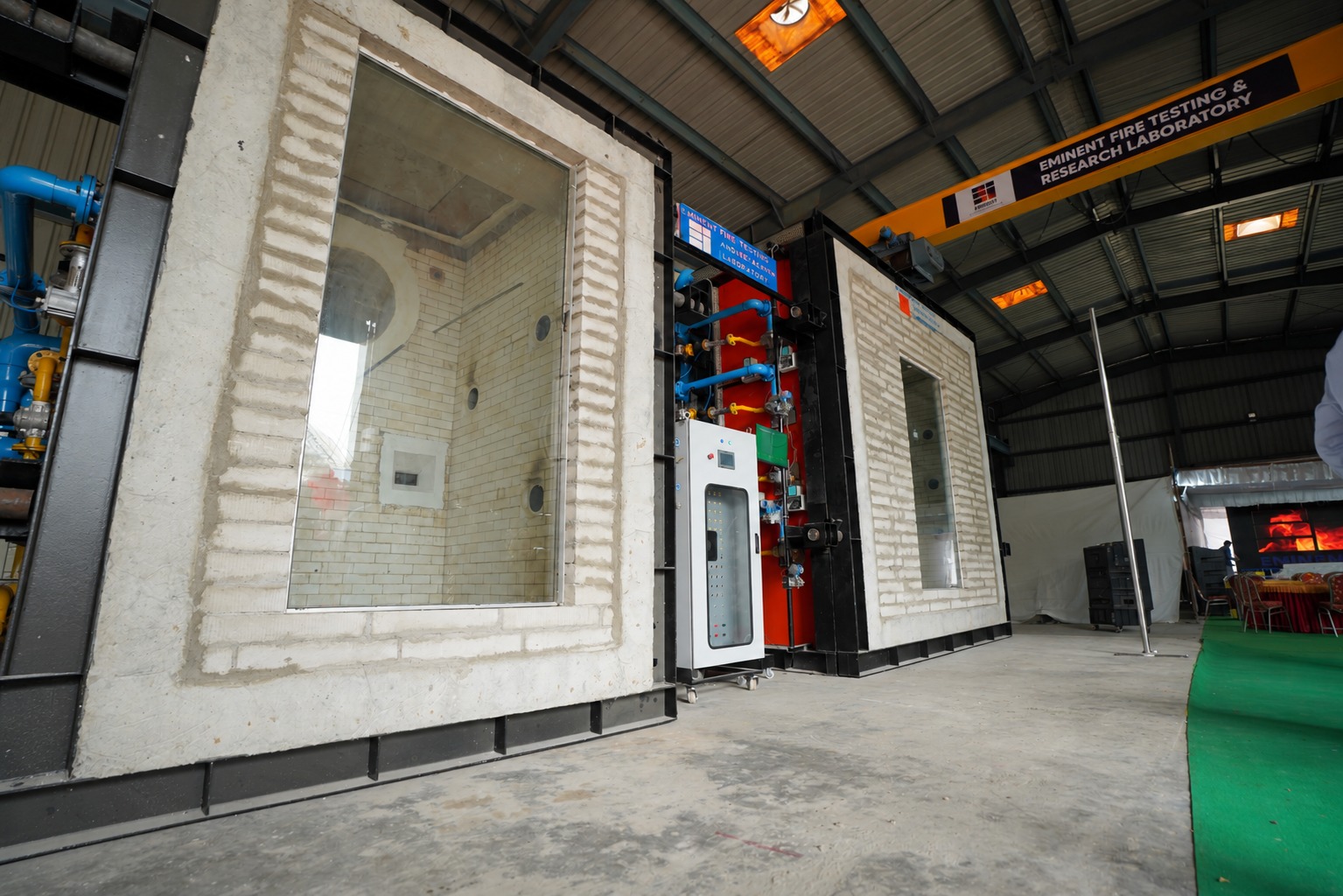
A building fire is not only a flame event. Heat, smoke, pressure, falling components and the loss of structural or separating functions can develop together. Materials that appear strong in ordinary service may soften, deform, crack, ignite or lose their connections when exposed to high temperatures. Fire testing creates controlled evidence of these behaviours before people must depend on the construction in an emergency.
Testing is needed because calculations, drawings, material data and visual inspection cannot reproduce every interaction within a complete system. Fixings, joints, gaps, supporting construction, workmanship and thermal movement can alter performance. A controlled test allows these factors to be observed and measured under defined exposure conditions.
The purpose is not simply to obtain a report. The purpose is to discover whether a product or assembly performs as intended, identify limitations, support responsible design choices and reduce uncertainty. When the result is used within its valid scope, it becomes practical evidence for manufacturers, designers, authorities, contractors and building owners.
Fire testing is a broad field covering different questions about how products behave in fire. Depending on the product and the applicable method, testing may examine ignitability, flame spread, heat release, smoke production, fire resistance or the performance of a particular protective system. Each test has a defined purpose, and one type of result should not be treated as proof of every aspect of fire safety.
Fire resistance testing specifically evaluates how a building element or assembly performs when exposed to a prescribed fire for a period of time. It is commonly concerned with loadbearing capacity, integrity against flames and hot gases, thermal insulation and, where relevant, radiation or other defined criteria. It applies to complete constructions such as doors, walls, floors, glazing, structural members and service-penetration systems.
This distinction matters. A material may have favourable surface-burning behaviour but may not provide fire resistance as a complete wall or door assembly. Conversely, a fire-resisting system depends on the interaction of all its components. Fire safety decisions must therefore use evidence from the test method that matches the intended function and application.
Controlled exposure turns fire behaviour into measurable technical evidence.
Fire-resisting construction is intended to delay structural collapse and restrict the spread of fire and heat from one area to another. This delay can be critical. It supports evacuation, allows emergency teams to approach and work more safely, and helps prevent a local fire from rapidly becoming a building-wide event.
A fire-resistance rating is not a permanent quality attached to a single material. It relates to a tested assembly, its construction details, orientation, size, supporting conditions and exposure. Substituting a sealant, changing a fixing, increasing a gap or altering the supporting wall may change the behaviour. Testing and technical review help prevent assumptions that are not supported by evidence.
Testing also supports product improvement. Observations of temperature rise, deformation, integrity failure or connection behaviour help manufacturers understand where a system is vulnerable. The product can then be redesigned and tested again before it is introduced into safety-critical construction.
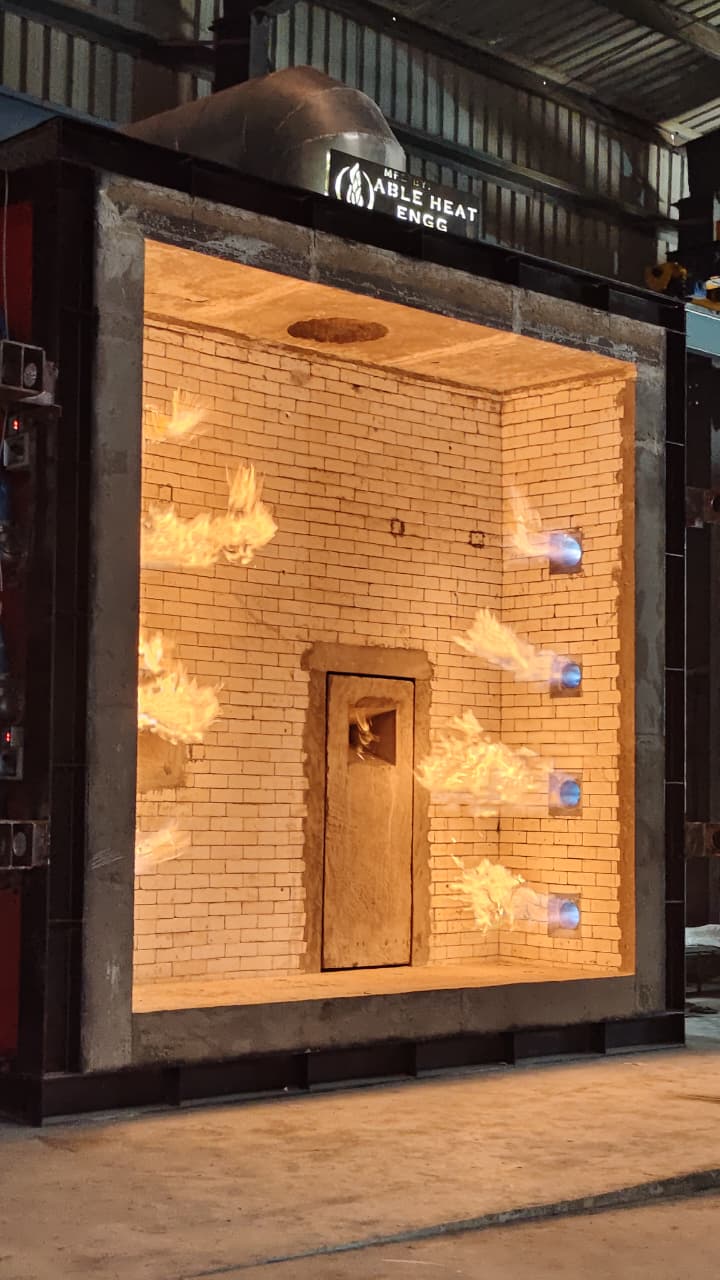
Protecting life and evacuation time Fire-resisting walls, floors, doors and structural systems are intended to slow fire and heat spread. Reliable evidence supports the selection of systems that can preserve escape routes and provide occupants with more time to reach safety.
Supporting firefighters and emergency response Compartmentation and structural stability can give emergency teams a more predictable environment. Although no test can reproduce every real fire, tested performance under defined conditions provides valuable information for fire-safety design and emergency planning.
Limiting damage and disruption Containing fire within the area of origin can reduce damage to neighbouring spaces, essential equipment and adjacent property. This can help protect homes, workplaces, hospitals, schools, transport facilities, data centres and industrial operations from wider loss.
Reducing economic and environmental impact Major fires create rebuilding costs, business interruption, waste and emissions. Better-informed product selection and correctly installed fire-resisting construction can reduce the scale of loss and support the resilience of communities and businesses.
Improving construction quality and accountability Test evidence creates a reference point for specifications, approvals, procurement and installation checks. It encourages manufacturers to substantiate claims and helps project teams identify whether the proposed construction matches the system that was evaluated.
Supporting innovation New materials and construction methods are valuable only when their performance is understood. Testing allows innovative products to be evaluated systematically, giving the market a safer path to adopt new solutions.
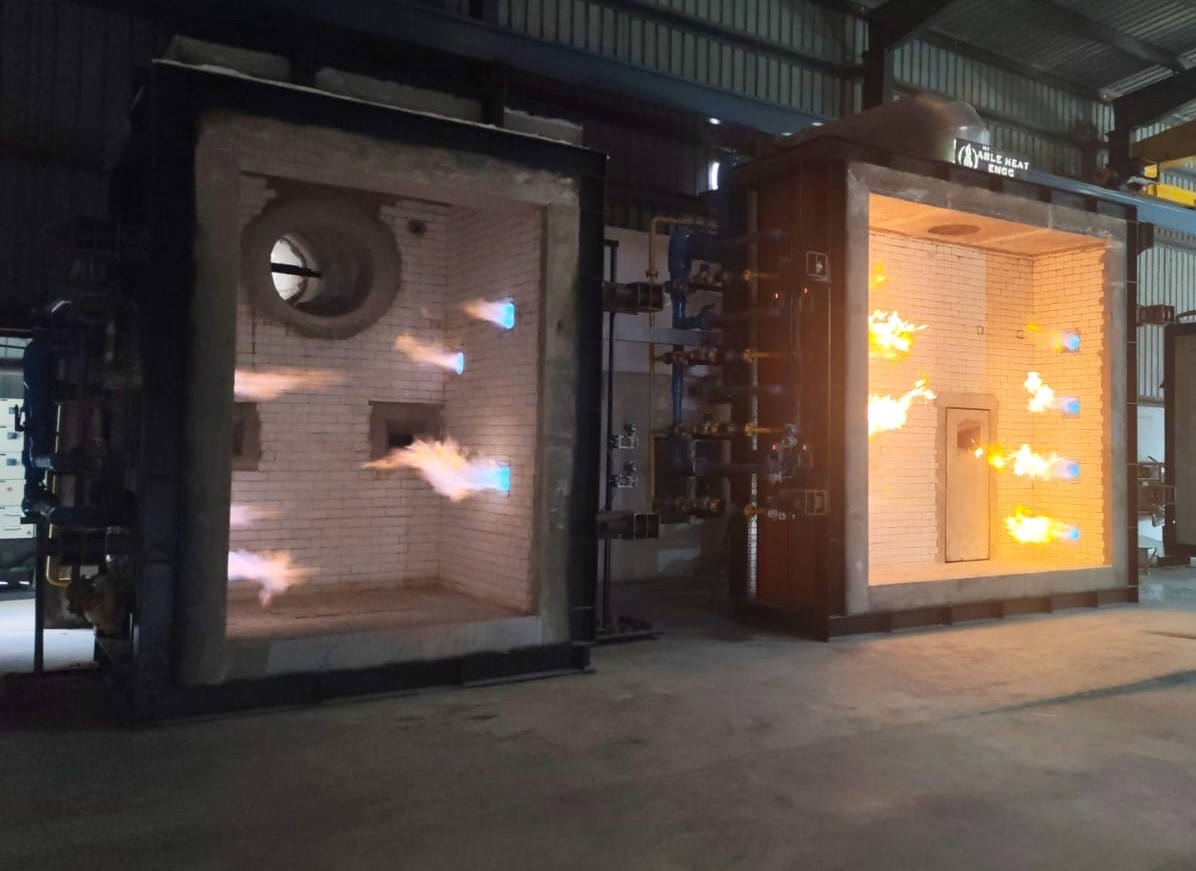
Fire safety is created through a chain of decisions. Manufacturers must develop and describe products responsibly. Laboratories must conduct testing carefully and report results clearly. Designers must select evidence relevant to the intended use. Contractors must follow the tested construction details, and building owners must maintain fire-safety systems throughout the life of the building.
Public awareness strengthens this chain. When clients and project teams ask whether a system has been tested, which standard was used, what construction was evaluated and whether the proposed installation is within the evidence, they make unsupported claims more difficult to accept. This culture of verification helps move fire safety from assumption to accountability.
Modern buildings depend on many connected fire-resisting elements: walls, doors, glazing, floors, service penetrations, joints and structural protection. A failure at one point can allow flames, hot gases or heat to spread beyond the intended compartment. Testing provides a controlled and measurable way to understand whether a product or system can perform its intended fire-safety function.
Awareness is therefore essential at every stage. Manufacturers need evidence during product development; architects and consultants need it when selecting and specifying systems; contractors must reproduce tested constructions correctly; and building owners need confidence that installed solutions are supported by relevant technical evidence.
During a fire resistance test, a representative construction is exposed to a prescribed temperature-time regime under controlled conditions. Measurements and observations show when critical performance limits are reached. Depending on the product and applicable standard, the evaluation may consider:
These criteria are important because a system may appear intact while losing insulation, allowing excessive radiation or undergoing movement that affects adjacent construction. Documented test observations and measurements reveal these weaknesses before a product is relied upon in an occupied building.
Fire safety depends on the performance of complete constructions rather than isolated materials. Fire resistance testing may therefore be required for a broad range of products and assemblies, including:
The test configuration must represent the intended construction as closely as the applicable method requires. Changes in dimensions, joints, fixings, supporting construction, insulation or service details can influence performance and should not be assumed to be covered without technical review.
A meaningful result depends on much more than placing a specimen in front of a furnace. The specimen must be identified, constructed and installed correctly, then exposed to the specified furnace temperature-time curve in an appropriate supporting construction. Test conditions must be monitored throughout the exposure.
Suitable instruments and data-acquisition systems record furnace temperature, pressure, unexposed-surface temperatures, deflection, movement and integrity observations as required. This traceable record converts a severe fire exposure into objective technical evidence that designers, manufacturers and project teams can evaluate.
Recognised test standards define the exposure, instrumentation, specimen arrangement, observations and performance criteria. The correct standard must be selected according to the product, intended application and required evidence. Relevant national and international standard families may include:
| Organization | Standard family |
|---|---|
|
IS |
|
BS |
|
EN |
|
ASTM |
|
UL |
|
NFPA |
A test result is meaningful only within its defined scope. Product construction, supporting conditions, specimen size, orientation and intended application must be reviewed before testing and before the evidence is used for a project.
For manufacturers Testing shows how a product behaves as part of a complete construction, supports responsible product development and helps identify weaknesses before market release. It also provides credible evidence for technical discussions with designers and clients.
For architects and consultants Test evidence supports informed product evaluation and specification. It helps professionals compare intended applications with tested configurations instead of relying only on general descriptions or promotional claims.
For contractors and project stakeholders Evidence helps confirm that the proposed construction has been evaluated under relevant conditions. Installation details must remain consistent with the tested system because apparently minor substitutions can affect fire performance.
For occupants and the wider community Effective compartmentation and structural fire resistance provide time for evacuation, emergency response and control of fire spread. Professional testing contributes to the shared technical knowledge needed to create safer buildings and infrastructure.
Precision Careful verification of specimen construction, installation, instrumentation, exposure conditions and observations.
Control Systematic management of furnace exposure, pressure and other test parameters according to the applicable method.
Traceability Clear documentation linking the tested specimen, equipment, measurements, observations, deviations and reported results.
Fire resistance testing should take place before a system is trusted in a real fire. It cannot guarantee the overall safety of a building by itself, but it provides essential evidence about defined products and assemblies under specified conditions. Eminent Fire Testing and Research Laboratory Private Limited supports this responsibility through controlled testing, careful measurement, transparent communication and systematic technical practices.

Mr. Reji Bhami
Director | Eminent International Testing Centre
Mr. Reji Bhami is the Director of Eminent International Testing Centre, with a strong focus on facade, building-envelope and performance testing. He has been instrumental in developing Eminent's testing capabilities in India and the Middle East, supporting major projects through specialised laboratory and onsite testing services.
With a focus on technical excellence, innovation and client collaboration, Mr. Reji Bhami has played an active role in expanding Eminent's testing infrastructure and introducing advanced testing solutions for facades, doors, windows, glass, railings and building-envelope systems.
He is passionate about building a technically strong organisation and creating practical testing solutions that contribute to safer, higher-quality buildings and infrastructure.
EMINENT FIRE TESTING AND RESEARCH LABORATORY PRIVATE LIMITED
Plot No. 76/Part, EPIP Industrial Park
Pashamaylaram, Isnapur - 502307
Hyderabad, Telangana, India
GST No. 36AAJCE2823M1ZE
Contact +91 70250 00043
Scan for location

With a very different concept, the magazine received tremendous and positive response. Passive Fire Safe India is the first magazine covering the Passive Fire segment. Passive fire protection involves Read More..
© Passive Fire Safe India. 2026 All Rights Reserved. Designed by VMH Web Solutions