



The Evolution of Fire-Resistant Glass in High-Rise Buildings
Modern architecture is increasingly defined by transparency, openness, and natural light. Glass has become one of the most dominant materials in contemporary high-rise construction, shaping skylines across major cities worldwide. From commercial towers and luxury hotels to airports, hospitals, and mixed-use developments, architects are using large glazed surfaces to create visually striking and energy-efficient spaces. However, as buildings continue to grow taller and more complex, the demand for fire safety within these transparent environments has become increasingly important. This has led to the rapid evolution of fire-resistant glass technology in modern high-rise buildings.
Traditionally, fire protection and transparency were considered conflicting design objectives. Conventional fire-rated walls were typically solid and opaque, limiting visibility and restricting natural light within protected areas. Architects often faced challenges balancing aesthetic ambitions with fire compartmentation requirements. Over time, advancements in glazing technology have transformed fire-resistant glass from a highly specialized product into an essential component of modern passive fire protection systems.
Fire-resistant glass is specifically engineered to withstand fire exposure for a defined period while helping prevent the spread of flames, smoke, and heat. Unlike ordinary glass, which can crack or shatter quickly under high temperatures, fire-rated glazing systems are designed to maintain integrity and, in some cases, provide thermal insulation during fire events.
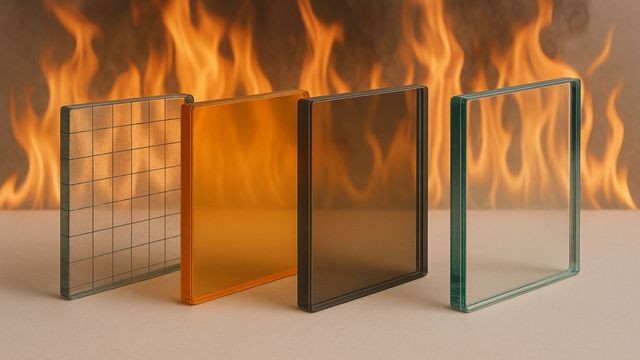
The earliest forms of fire-resistant glass were relatively simple wired glass products. These systems used embedded wire mesh to hold fractured glass pieces together during fire exposure. While wired glass offered basic fire containment performance, it had several limitations including poor optical quality, reduced impact resistance, and limited thermal insulation capabilities. Over time, building safety standards and architectural expectations demanded more advanced solutions.
As high-rise buildings evolved, the need for larger glazed openings, improved visibility, and higher safety performance accelerated innovation in fire-resistant glazing systems. Modern fire-resistant glass now includes advanced multi-layer laminated systems, gel-filled units, tempered fire glass, ceramic glazing, and insulated fire-rated assemblies capable of delivering both aesthetic appeal and high-performance fire protection.
One of the most important distinctions in fire-resistant glazing is the difference between integrity-only glass and insulation-rated glass. Integrity-rated systems are designed to prevent the passage of flames and smoke for a specified duration but may still transfer significant heat through the glass surface. These systems are commonly used in areas where radiant heat transfer is less critical.
Insulation-rated fire glass, on the other hand, not only prevents flame penetration but also limits heat transmission to the non-fire side of the assembly. This is especially important in evacuation routes, stairwells, refuge areas, and high-occupancy buildings where radiant heat can endanger occupants or ignite nearby materials. Modern insulated fire glazing systems can achieve fire ratings of 60, 90, 120 minutes or more while maintaining transparency and architectural aesthetics.
The growth of high-rise construction has significantly increased the importance of fire-resistant glazing. Tall buildings present unique fire safety challenges due to vertical evacuation complexity, extended occupant loads, stack effect, and facade fire risks. Fire-rated glass is now widely used in stair enclosures, atriums, corridors, lobbies, data centers, control rooms, smoke barriers, and fire compartment boundaries throughout modern towers.
Atrium design has been one of the key architectural trends driving the evolution of fire-resistant glass. Large open atriums create visually impressive spaces that improve natural lighting and occupant experience. However, these open volumes also create potential pathways for rapid smoke and fire spread between floors. Fire-resistant glazing allows designers to maintain visual openness while preserving fire compartmentation and smoke control strategies.
Healthcare infrastructure has also become a major application area for fire-rated glass systems. Hospitals require compartmentation strategies that support both patient safety and staff visibility. Fire-resistant glazing enables healthcare facilities to maintain observation lines while protecting escape routes and critical treatment areas during emergencies.
Similarly, airports, transportation hubs, hotels, and commercial buildings increasingly rely on fire-rated glass to combine openness with compliance. Occupants today expect buildings to feel bright, transparent, and connected rather than enclosed by heavy fire barriers. Fire-resistant glass helps achieve these architectural goals without compromising passive fire protection requirements.
Facade engineering has further accelerated advancements in fire-rated glazing systems. Following several major international high-rise fire incidents, greater attention is being placed on external wall fire performance and facade compartmentation. Curtain wall systems, spandrel panels, perimeter fire barriers, and glazed facades must now meet increasingly strict fire safety standards while maintaining energy efficiency and visual appeal.
Modern fire-resistant glazing systems are therefore being integrated into complex facade assemblies that combine thermal insulation, acoustic control, structural movement capability, blast resistance, and fire performance within a single system. This multi-functional approach reflects the growing complexity of contemporary building envelopes.
Testing and certification have become central to the development of fire-resistant glass technologies. Fire-rated glazing systems are tested according to international standards such as ASTM, UL, EN, and BS protocols. These tests evaluate integrity, insulation performance, smoke leakage, structural stability, and thermal radiation under controlled fire conditions.
Importantly, fire-resistant glass must always be evaluated as part of a complete assembly, including frames, seals, fixings, glazing beads, and supporting construction. Even high-performance fire glass can fail if installed within non-certified framing systems or modified incorrectly on site.
Installation quality remains one of the biggest challenges in maintaining fire-rated glazing performance. Incorrect sealants, incompatible framing materials, improper fixing methods, or unauthorized modifications can compromise certification and reduce fire resistance. As glazing systems become larger and more technically advanced, the demand for specialized installation expertise is also increasing.
Digital technologies such as Building Information Modeling (BIM) are helping improve coordination between architects, facade consultants, fire engineers, and contractors. BIM allows project teams to integrate fire-rated glazing systems into compartmentation strategies more effectively while improving documentation and compliance tracking.
Sustainability is also influencing the future of fire-resistant glass. Manufacturers are developing systems with improved thermal efficiency, solar control, and environmental performance to support green building objectives. High-performance fire-rated glazing can now contribute to daylight optimization, energy savings, and occupant wellbeing alongside life safety protection.
In India, the demand for fire-resistant glass is growing rapidly as urban infrastructure expands and architectural ambitions increase. High-rise towers, commercial developments, airports, hospitals, metro projects, and luxury hospitality buildings are all contributing to greater adoption of advanced fire-rated glazing systems. Regulatory awareness around compartmentation and facade safety is also strengthening following global fire safety discussions.
The future of fire-resistant glass will likely involve even greater integration of smart technologies, lightweight materials, and multi-functional performance capabilities. Innovations such as electrochromic fire-rated glazing, dynamic smoke-control systems, and enhanced impact resistance may further transform how transparent fire barriers are used in modern construction.
Ultimately, the evolution of fire-resistant glass reflects the broader transformation of passive fire protection itself. Fire safety is no longer viewed solely as a regulatory requirement hidden behind walls and barriers. Instead, it is becoming an integrated part of modern architectural expression, balancing transparency, aesthetics, occupant comfort, and life safety within increasingly sophisticated buildings.
As cities continue to build upward, fire-resistant glass will remain a critical technology in shaping safer, more resilient, and visually connected urban environments.