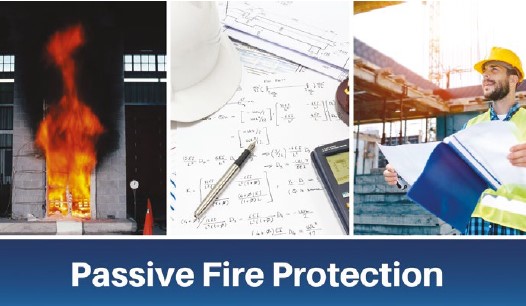
The Future of Passive Fire Testing and Certification: Building Confidence Through Standards
Highlight
The foundation of effective passive fire protection lies in rigorous testing and certification.
As buildings grow more complex and materials evolve, the future of fire safety depends on advanced
testing technologies, harmonized global standards, and data-driven certification systems that
ensure transparency, trust, and lasting protection for every built environment.
In the modern construction landscape, passive fire protection has evolved from a compliance
requirement to a fundamental pillar of safety engineering. Yet, the effectiveness of any
fire-resistant system—be it a wall assembly, door set, cable penetration seal, or intumescent
coating—relies on one crucial aspect: accurate testing and credible certification. Without
rigorous evaluation, even the most advanced materials cannot guarantee real-world fire
performance. As the industry looks toward the future, the frameworks of fire testing and
certification are being reshaped by innovation, digitalization, and global collaboration.
The Science Behind Fire Testing
Fire testing determines how building components perform when exposed to extreme heat, flames,
and smoke. Traditionally, testing involves exposing specimens to controlled fire conditions
using standardized procedures such as ISO 834, ASTM E119, or EN 1363-1. These tests assess
factors like integrity, insulation, and load-bearing capacity.
However, as construction materials and techniques diversify—ranging from composite claddings
to prefabricated modules—the conventional test methods face new challenges. Engineers now
demand testing that replicates complex, real-life scenarios, such as multi-compartment fires
or façade flame spread. Advanced test furnaces, digital thermocouples, and real-time data
analytics are becoming essential tools to understand material behavior more precisely.
The future of fire testing is expected to shift toward performance-based testing, which
evaluates how a system behaves under varying fire loads and conditions, rather than relying
solely on standardized time-temperature curves. This approach allows for greater flexibility
and innovation, especially in modern architecture where materials and geometries rarely
conform to traditional setups.
From Testing to Certification: Bridging the Trust Gap
Testing is just one part of the safety chain; certification ensures that products consistently
meet their rated performance in the real world. Certification bodies assess manufacturing
processes, material quality, and product consistency, issuing approvals that builders and
authorities can trust.
In India, organizations like CFRI, BIS, and international agencies such as UL, FM Approvals,
and BSI play a pivotal role in validating passive fire products. As construction projects
increasingly adopt global standards, there’s a growing need for Mutual Recognition Agreements
(MRAs) that harmonize certification across regions. This would prevent redundant testing and
allow manufacturers to market their products more efficiently while maintaining safety
assurance.
Future certification frameworks will likely integrate blockchain-based traceability and
AI-powered quality control. Every certified product could carry a digital passport verifying
its source, test data, and compliance record—accessible to inspectors and designers through
cloud-based systems. Such innovations will make the certification process more transparent
and tamper-proof.
Global Standardization: Toward Harmonized Fire Safety Codes
Disparities between national fire standards have long been a barrier to international
construction and trade. For instance, a fire door certified to EN 1634-1 in Europe might not
automatically be accepted under UL 10C in North America. This fragmentation leads to
confusion, duplicated efforts, and inconsistent safety levels.
The future lies in harmonized testing protocols and cross-recognition agreements between major
fire authorities. The International Fire Safety Standards (IFSS) initiative, backed by
organizations like the United Nations and the International Code Council, is already moving
toward this goal. A unified approach ensures that safety is not compromised by regional
discrepancies and that manufacturers can focus on innovation rather than repetitive
bureaucracy.
For India, aligning domestic standards like IS 12458 or NBC Part 4 with global norms could
boost export potential and elevate construction quality. It would also support the country’s
growing infrastructure ambitions—smart cities, high-rise buildings, and transit hubs—by
ensuring all materials meet world-class safety benchmarks.
Digitalization and the Data Revolution in Fire Testing
One of the most transformative trends shaping the future of passive fire testing is digital
simulation and modeling. Tools like Computational Fluid Dynamics (CFD) and Finite Element
Analysis (FEA) allow engineers to simulate fire spread, material degradation, and structural
response under virtual conditions before any physical test occurs.
Digital twins—virtual replicas of buildings—are now being used to predict how fire protection
systems will perform over time. By integrating testing data into Building Information
Modelling (BIM) platforms, designers can visualize how passive fire components interact within
a structure. This approach not only improves design precision but also aids maintenance
planning throughout the building’s lifecycle.
In the near future, testing laboratories may operate as smart fire labs, combining physical
and digital testing. Sensors embedded in test specimens could transmit real-time data to AI
systems that instantly evaluate thermal resistance, deformation, and failure points. This
fusion of technology will drastically enhance the accuracy, repeatability, and efficiency of
testing.
Sustainability and Green Testing Standards
As the world pivots toward sustainability, the fire protection industry is embracing
eco-friendly materials and testing methods that reduce environmental impact. The next
generation of testing will evaluate not only fire resistance but also toxicity, smoke
emission, and environmental footprint of materials.
New certifications may integrate sustainability metrics such as carbon-neutral fire coatings
or recyclable fire barriers—encouraging manufacturers to balance safety with ecological
responsibility. Programs like LEED and BREEAM are already beginning to recognize
fire-resistant materials that meet environmental goals, signaling a merger between fire
safety and green building principles.
Challenges and Opportunities Ahead
Despite progress, the path toward advanced testing and certification faces challenges. Fire
laboratories require significant investment, and test capacity often lags behind industry
demand. Smaller manufacturers struggle with high testing costs and complex certification
pathways.
To overcome these barriers, the industry must promote collaboration between regulators,
laboratories, and manufacturers. Government incentives for R&D, combined with
public-private partnerships, can help build more testing infrastructure and accelerate
certification timelines.
Moreover, ongoing training and education for fire engineers, inspectors, and product
developers will be essential. Understanding the evolving standards and technologies ensures
that all stakeholders remain aligned with the ultimate goal—saving lives and safeguarding
property.
Conclusion: Toward a Transparent and Reliable Fire-Safe Future
The future of passive fire testing and certification is not just about compliance—it’s about
building confidence in every wall, seal, and structure that protects people. By combining
rigorous standards with digital intelligence and sustainability, the industry is stepping
into a new era of reliability and transparency.
In this evolving landscape, every tested material, every certified component, and every
approved system will tell a story of trust—a story that reaffirms the power of standards to
turn engineering precision into life safety. The buildings of tomorrow will not only stand
taller and greener but also, most importantly, stand safer.