



The Role of Fire Dampers in Containing Airborne Fire Spread
Highlight : Fire dampers are often the silent protectors within HVAC systems, preventing flames and smoke from traveling through air ducts. This article explores how they function, types of dampers available, their testing standards, and why proper installation and maintenance are essential for achieving reliable passive fire protection
When it comes to passive fire protection, one of the least visible yet most critical components within a building’s fire safety infrastructure is the fire damper. These devices are strategically installed within Heating, Ventilation, and Air Conditioning (HVAC) ductwork to stop the spread of flames and smoke through air pathways during a fire. Without them, air ducts can quickly become conduits for fire to spread from one compartment to another, defeating the purpose of fire-rated barriers and compartmentation systems. Fire dampers therefore act as a first line of defense, ensuring that the integrity of compartmentalization is maintained even when air circulation systems are compromised.
The fundamental purpose of a fire damper is simple yet vital to automatically close when heat or smoke is detected, effectively sealing off air passages. This helps contain the fire to its origin point, allowing occupants more time to evacuate and emergency responders more time to act. Fire dampers operate automatically, usually through a fusible link mechanism or thermal sensor that triggers closure when temperatures exceed a preset limit, typically around 72°C to 74°C. Once activated, the damper’s blades or curtain drop into position, blocking the duct opening and preventing both flame and hot gases from spreading.
There are several types of fire dampers designed to serve different functions within the passive fire safety framework. The most common are curtain-type fire dampers, multi-blade fire dampers, and intumescent fire dampers. Curtain type dampers utilize interlocking blades that collapse and seal the duct upon activation, commonly used in horizontal duct runs. Multi-blade dampers feature multiple pivoting blades for better airflow control and are preferred in systems that require low pressure drop when open. Intumescent dampers, on the other hand, use heat-reactive materials that expand under high temperatures to create an airtight seal. These are particularly effective in areas where traditional mechanical operation is impractical or where maintenance access is limited.
Beyond fire dampers, the integration of combination fire and smoke dampers has become increasingly popular in modern construction. These hybrid devices not only resist the passage of flames but also prevent the migration of smoke, which is often more deadly than fire itself. Smoke dampers incorporate sensors that detect smoke particles and close before flames even reach the ductwork, limiting smoke spread across compartments. The integration of these systems within HVAC controls enhances both passive and active fire protection coordination ensuring that fire alarm systems, sprinklers, and dampers work harmoniously during an emergency.
The selection and placement of fire dampers are not arbitrary decisions; they are governed by strict codes and standards. In India, compliance with National Building Code (NBC 2016) and standards like IS 15105:2002 (Performance of Fire Dampers) ensures that installations meet minimum safety benchmarks. Globally recognized standards such as UL 555 and BS EN 1366-2 outline rigorous testing procedures, temperature resistance criteria, and operational reliability assessments. These standards ensure that dampers can withstand fire exposure for specified durations typically 1, 2, or 3 hours depending on the building’s compartmentation requirements.
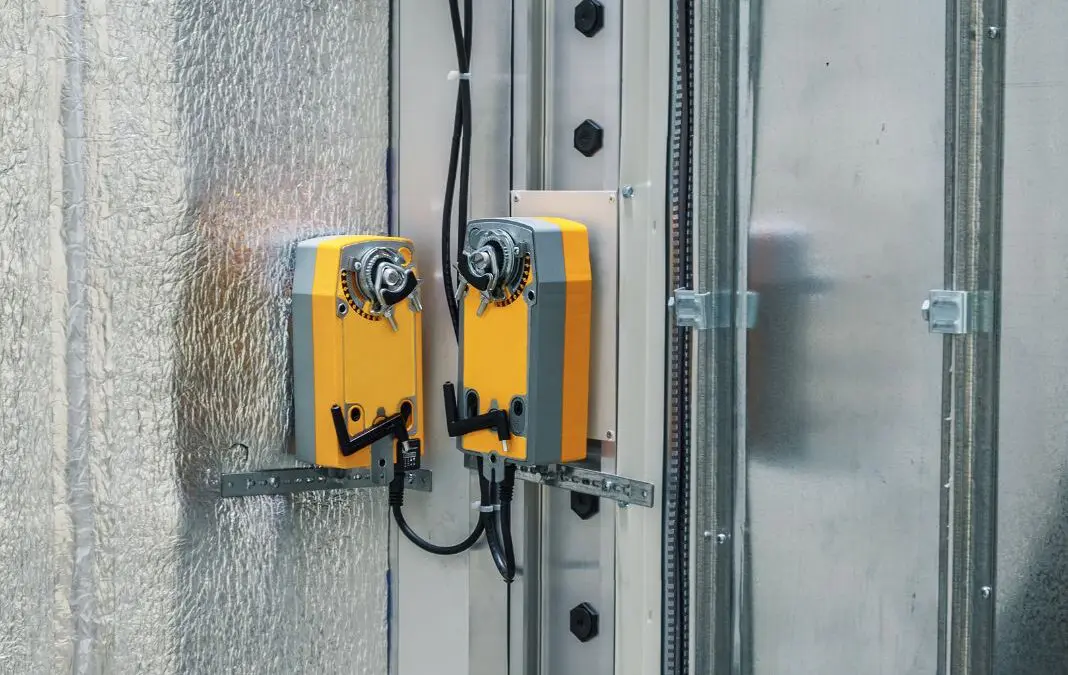
Proper installation is key to the effective functioning of fire dampers. Even the highest-rated product will fail if not installed correctly. Dampers must be located within the plane of fire-rated barriers, with the frame securely anchored to prevent distortion under heat. Sealants and mounting materials used must also be fire-rated. It’s essential that the damper blades, linkages, and actuators remain free from obstruction to ensure smooth operation during activation. Unfortunately, one of the most common issues in real-world scenarios is improper installation either due to poor coordination between HVAC contractors and fire safety consultants or a lack of understanding of the product’s requirements.
Maintenance is equally crucial. Fire dampers are not “fit and forget” components. Over time, dust accumulation, corrosion, or mechanical damage can impede their functionality. Regular inspection and testing, as mandated by building safety standards, should be conducted at least annually. During maintenance checks, technicians should verify that the fusible links are intact, blades move freely, and seals remain unbroken. Documentation of these inspections helps building owners demonstrate compliance with safety audits and local authority regulations. In advanced systems, motorized or spring-return dampers may be connected to Building Management Systems (BMS), allowing remote monitoring and testing further enhancing maintenance efficiency.
One growing trend in the fire safety industry is the use of smart monitoring systems for fire dampers. These IoT-enabled devices continuously monitor damper status, temperature levels, and actuator health, sending alerts when anomalies occur. This proactive approach enables early detection of faults, reducing the risk of dampers failing to operate during a fire event. With the integration of smart systems, facilities management teams can now perform predictive maintenance instead of reactive repairs an approach that saves both time and money while improving overall safety reliability.
In high-risk environments such as hospitals, data centers, or manufacturing plants, fire dampers play an even more crucial role. These facilities often operate continuous HVAC systems that cannot be easily shut down. In such cases, fire dampers provide the necessary compartmentalization without disrupting airflow. Hospitals, for instance, rely on dampers to prevent smoke from spreading between patient wards, ensuring safer evacuation zones. Similarly, in data centers, dampers protect expensive electronic equipment by isolating fire to the affected rack area and preventing contamination from smoke.
Architects and fire engineers must work closely from the design stage to ensure proper damper integration. The placement, access panels for inspection, and compatibility with other passive fire elements like fire doors and sealants must all be pre-planned. Early-stage collaboration helps prevent last-minute changes or compromises that could weaken the fire safety strategy. Passive fire safety is only as strong as its weakest link, and fire dampers form one of the most vital yet often overlooked components in that chain.
In the grand scheme of passive fire safety, fire dampers symbolize an intersection of engineering precision and life-saving functionality. They operate quietly in the background, ensuring that comfort systems don’t become conduits for catastrophe. As urbanization continues and buildings become taller and more complex, the role of fire dampers will only grow in importance. By combining proper design, certified materials, rigorous testing, and smart maintenance, we can ensure that these hidden guardians continue to perform their crucial duty protecting lives and property when it matters most.