Thermal Spalling of Concrete in Fire: Causes, Risks & Passive Mitigation Strategies
“Thermal spalling of concrete during fire can expose reinforcement, reduce load-bearing capacity, and trigger premature structural failure. High-strength concrete, moisture content, and rapid heating intensify the risk. This article examines spalling mechanisms, real-world implications, and passive mitigation strategies essential for resilient structural fire engineering.”
Concrete is widely perceived as a fire-resistant material due to its non-combustible nature and inherent thermal mass. In most Indian buildings—whether high-rise residential towers, commercial complexes, basements, tunnels, or industrial facilities—reinforced concrete forms the backbone of structural stability. However, under severe fire exposure, concrete can exhibit a dangerous and often underestimated phenomenon known as thermal spalling. This process can significantly compromise structural integrity, even before the full fire-resistance rating of the element is reached. Understanding the mechanisms, risks, and mitigation strategies associated with thermal spalling is critical for advancing passive fire engineering in modern construction.
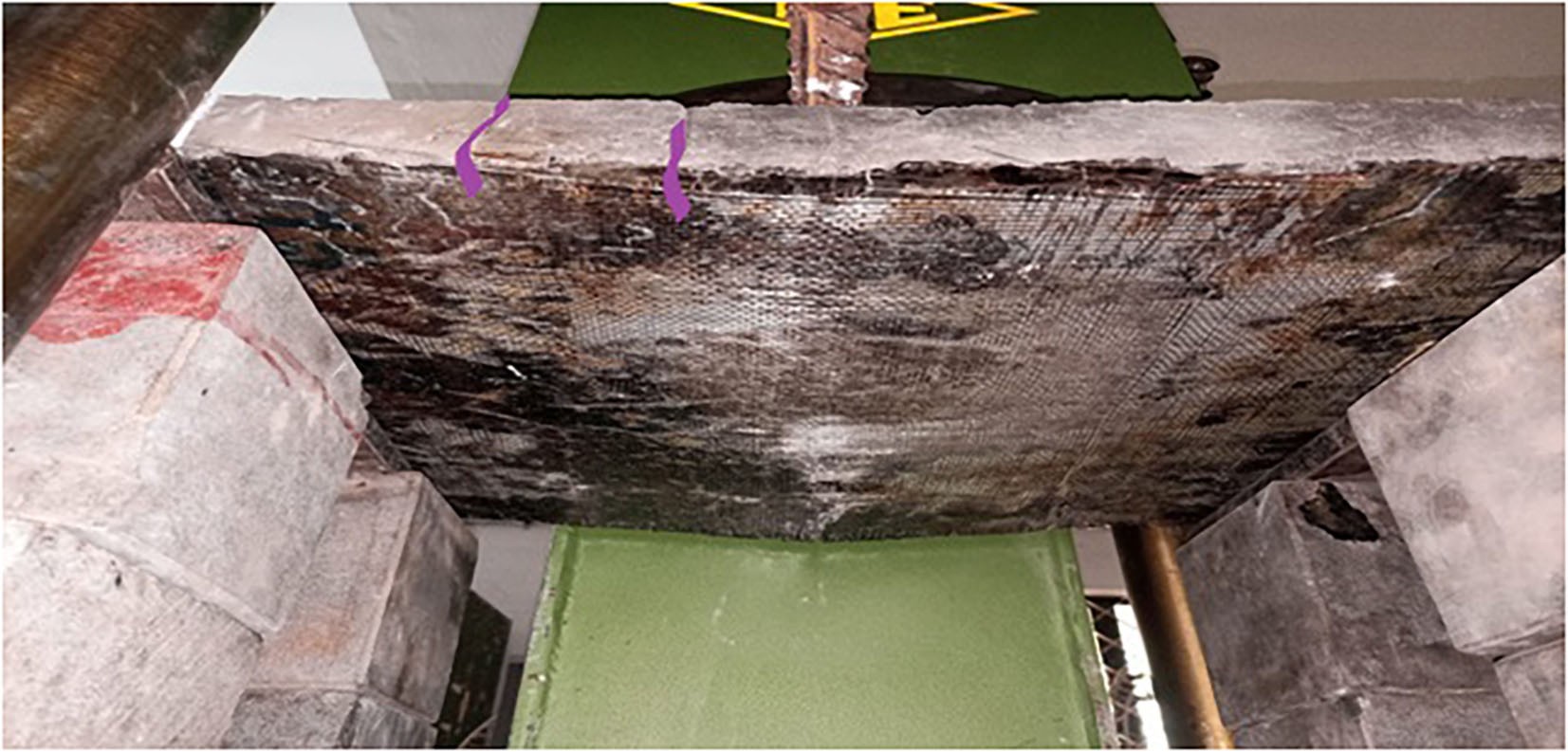
Thermal spalling occurs when layers of concrete break away from the surface during exposure to high temperatures. This detachment can range from minor surface flaking to violent, explosive fragmentation that exposes reinforcement bars. When reinforcement becomes directly exposed to fire, it rapidly heats up, leading to a substantial reduction in strength and stiffness. In severe cases, this can result in premature structural failure, long before the expected fire resistance duration is achieved. For load-bearing columns and slabs, such failure can have catastrophic consequences.
The primary driver of thermal spalling is the buildup of pore pressure within concrete. Concrete contains inherent moisture, even in hardened form. When subjected to rapid heating, such as during a vehicle fire in a basement or a hydrocarbon fire in a tunnel, the water inside the concrete turns into steam. If the permeability of the concrete is low, this vapor cannot escape quickly enough. The resulting internal pressure builds up until it exceeds the tensile strength of the concrete, causing layers to detach violently. This mechanism is especially pronounced in dense, high-strength concrete.
High-strength concrete, while offering superior compressive capacity under normal conditions, is paradoxically more vulnerable to explosive spalling during fire. Its dense microstructure and low permeability restrict moisture migration, increasing internal vapor pressure during rapid heating. Modern construction in India increasingly uses high-strength concrete in high-rise buildings and infrastructure projects to optimize structural efficiency. Without appropriate fire engineering consideration, these structures may face elevated spalling risks during severe fire scenarios.
Rapid heating rates significantly influence spalling severity. Fires involving hydrocarbons—such as fuel spills in tunnels, industrial facilities, or basement car parks—produce steep temperature rise curves. Unlike the gradual temperature increase simulated in standard fire tests, hydrocarbon fires can escalate to extremely high temperatures within minutes. This rapid heating intensifies thermal gradients within concrete sections, increasing internal stresses and pore pressure. The combination of mechanical restraint, thermal expansion mismatch, and vapor buildup can lead to explosive failure of surface layers.
Structural restraint also contributes to spalling behavior. In reinforced concrete elements, thermal expansion is often restrained by adjacent structural components. When heated, concrete attempts to expand, but external restraint induces compressive stresses near the surface and tensile stresses internally. These stress imbalances can trigger cracking and surface detachment. Columns, beams, and tunnel linings are particularly susceptible due to geometric confinement and multi-directional restraint.
The consequences of thermal spalling extend beyond surface damage. Once reinforcement is exposed, its temperature rises rapidly due to direct flame impingement and reduced insulating cover. Steel loses approximately 50 percent of its strength at around 550°C, and at higher temperatures, its load-bearing capacity deteriorates dramatically. Reduced reinforcement cover also compromises durability and increases post-fire repair complexity. In extreme cases, progressive collapse mechanisms may initiate if load redistribution exceeds structural redundancy.
Tunnel fires worldwide have highlighted the destructive impact of spalling. Severe hydrocarbon fires in confined tunnel environments have led to extensive concrete lining damage, requiring costly rehabilitation. Basement parking fires in urban developments pose similar risks, particularly with the increasing presence of electric vehicles and high fuel loads. As Indian infrastructure expands, the risk profile associated with intense fire exposure grows accordingly.
Mitigating thermal spalling requires a combination of material design and passive protection strategies. One of the most effective preventive measures is the incorporation of polypropylene (PP) fibers in concrete mixes. These microfibers melt at relatively low temperatures, creating microscopic channels within the concrete matrix. These channels provide pathways for steam to escape, relieving internal pressure and significantly reducing the likelihood of explosive spalling. The addition of PP fibers has become standard practice in many tunnel and infrastructure projects globally and is increasingly recognized in Indian high-risk applications.
Concrete mix design optimization also plays a crucial role. Controlling moisture content, adjusting aggregate selection, and avoiding excessively dense compositions can improve fire resilience. Adequate curing practices reduce residual moisture levels, further lowering vapor pressure risks. Engineers must balance mechanical performance with fire resistance characteristics when specifying high-strength concrete for critical structures.
In certain high-risk environments, additional passive fire protection measures may be required. Fire-resistant boards or spray-applied fireproofing materials can be applied to concrete surfaces to reduce heating rates. These systems act as thermal barriers, slowing temperature rise and minimizing thermal gradients within the concrete section. In tunnels and petrochemical facilities, specialized fireproofing systems are often installed to withstand hydrocarbon fire exposure curves.
Designing for sufficient concrete cover over reinforcement is another fundamental mitigation strategy. Increased cover thickness provides additional thermal insulation, delaying reinforcement temperature rise even if surface spalling occurs. However, simply increasing cover without addressing spalling mechanisms may not fully mitigate risk in severe fire scenarios. Integrated design approaches combining cover thickness, fiber reinforcement, and external fire protection are often necessary..
Post-fire assessment of spalled concrete structures requires detailed structural evaluation. Engineers must assess the depth of damage, residual reinforcement strength, and overall load-bearing capacity. Non-destructive testing methods, core sampling, and thermal imaging can assist in evaluating damage extent. Repair strategies may involve re-profiling damaged surfaces, applying repair mortars, or adding external strengthening systems.
As India’s construction sector continues to adopt high-performance materials and pursue vertical growth, understanding the fire behavior of concrete becomes increasingly important. Passive fire engineering must move beyond simplistic assumptions that concrete is inherently fireproof. Realistic fire scenarios, especially in basements, tunnels, industrial facilities, and high-rise cores, demand deeper technical analysis.
In conclusion, thermal spalling of concrete represents a critical vulnerability in structural fire performance. Driven by moisture content, rapid heating, dense microstructures, and structural restraint, spalling can expose reinforcement and compromise load-bearing capacity. Through informed mix design, polypropylene fiber incorporation, adequate cover, and supplementary fire protection systems, engineers can significantly reduce risk. As fire engineering practice in India evolves, addressing thermal spalling proactively will be essential for ensuring resilient and durable structures capable of withstanding severe fire exposure.