Advances in Fire-Resistant Gypsum and Drywall Systems
The construction industry has always searched for materials that are lightweight, versatile, and safe. Among these, gypsum and drywall systems have emerged as preferred choices in modern architecture. Their ability to combine structural efficiency with fire resistance makes them indispensable in the field of passive fire protection. Traditionally used for partitions, ceilings, and wall linings, gypsum systems are no longer viewed as secondary finishes; they have become critical fire barriers that play a major role in safeguarding occupants during fire emergencies.
Gypsum, chemically known as calcium sulfate dihydrate, has a natural advantage when it comes to fire resistance. This mineral contains water molecules that, when exposed to fire, are gradually released as steam. This process, called calcination, absorbs heat energy and slows down the transfer of heat through the material. As a result, gypsum-based boards can resist high temperatures for extended periods, delaying structural failure and preventing fire spread. Drywall systems that use gypsum boards as their core component take advantage of this property, offering fire-rated assemblies that meet strict building codes.
The fire resistance of gypsum boards depends on several factors, including board thickness, type, and additives. Standard gypsum boards already provide some level of fire protection, but advanced fire-rated boards include reinforcements like glass fibers and vermiculite, which enhance their performance under fire conditions. These boards can resist fire for up to four hours, depending on their configuration. In high-rise buildings, hospitals, schools, and industrial facilities, fire-rated drywall partitions and ceilings are often part of the first line of defense against fire spread.
One of the biggest advantages of gypsum and drywall systems is their lightweight nature. Unlike brick or concrete walls, which are heavy and time-consuming to install, gypsum partitions can be erected quickly and efficiently without adding significant load to the structure. This is especially important in modern high-rise buildings where every kilogram of weight matters. The reduced installation time also contributes to cost savings, making fire-resistant gypsum systems not only effective but also economical.
Recent years have seen several innovations in gypsum and drywall technology aimed at improving fire performance and sustainability. Manufacturers are now developing boards with enhanced cores that can withstand higher temperatures without crumbling. Some advanced products incorporate intumescent additives, which expand when exposed to heat, sealing gaps and providing an additional layer of fire protection. Others are engineered to resist not only fire but also moisture and mold, making them suitable for a wider range of environments such as basements, bathrooms, and coastal buildings.
Sustainability is another area where gypsum boards are gaining attention. Many producers are now using recycled gypsum and paper to manufacture boards, reducing the environmental footprint of construction. Additionally, fire-resistant gypsum boards can be part of green building certifications like LEED, offering points for their low environmental impact while still ensuring safety. The combination of fire performance, lightweight design, and sustainability makes gypsum systems an attractive solution for modern builders and developers.
The role of gypsum in passive fire safety is not limited to walls and ceilings. Drywall systems are also used in shaft walls, stairwell enclosures, and corridor partitions, all of which are critical components in fire compartmentation. In these applications, fire-rated gypsum assemblies help maintain safe evacuation routes and prevent fire from spreading to escape paths. For example, stairwells lined with fire-rated gypsum can resist flames long enough for occupants to exit safely, even if a major fire is raging in an adjacent area.
Compliance with standards is essential to ensure that gypsum systems deliver their intended performance. In India, the National Building Code requires the use of fire-rated construction materials in specific occupancies, and gypsum boards tested under IS standards are increasingly being adopted. Internationally, ASTM and EN standards provide testing benchmarks for fire resistance, ensuring that gypsum systems perform consistently under real-world conditions. Builders, architects, and engineers must select systems that have been certified by recognized testing bodies to guarantee reliability.
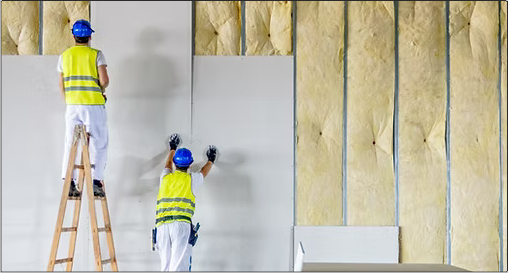
Despite these advantages, there are challenges that must be addressed. Improper installation can compromise fire performance, as even small gaps or misalignments can allow flames and smoke to bypass barriers. Regular training for contractors and site workers is necessary to ensure that gypsum boards are installed correctly with fire-rated jointing compounds, sealants, and fasteners. Maintenance is equally important, as damage to partitions during renovations or daily use can weaken fire resistance if not repaired promptly.
The future of gypsum and drywall systems in passive fire protection looks promising, with ongoing research and development driving improvements. Smart boards that change color under extreme heat to indicate fire exposure are already being explored. Integration with digital Building Information Modeling (BIM) also allows engineers to simulate fire performance and design optimized drywall assemblies before construction begins. These advancements ensure that gypsum systems will remain a cornerstone of passive fire safety for decades to come.
In conclusion, gypsum and drywall systems are far more than simple interior finishes; they are essential elements of passive fire protection in modern buildings. Their ability to provide reliable fire resistance, combined with ease of installation and sustainability, makes them one of the most versatile solutions for architects and builders. With continuous innovations enhancing their performance, gypsum systems are set to play an even greater role in protecting lives and infrastructure. For India and the world at large, embracing these advanced fire-resistant materials is key to constructing safer, smarter, and more resilient buildings.