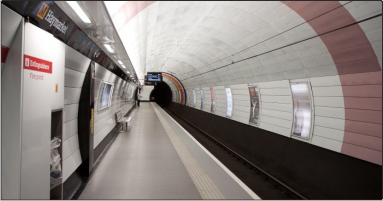
Challenges of Passive Fire Safety in Underground Metro and Tunnel Projects
Underground metro and tunnel projects have transformed urban mobility worldwide, including in India. While these infrastructures offer efficiency and convenience, they present significant fire safety challenges. The enclosed nature of tunnels, combined with heavy passenger flow and complex electrical systems, makes fire protection a top priority. Passive fire safety plays a crucial role in preventing disaster and ensuring safe evacuation during emergencies.
WHY FIRE SAFETY IN TUNNEL IS UNIQUE?
- Confined Spaces:Fires spread quickly with limited escape options.
- Ventilation challenges:Smoke can linger and obstruct visibility.
- High occupancy:Hundreds to thousands of passengers at peak hours.
- Critical infrastructure: Any fire incident can paralyze entire transport systems.
ROLE OF PASSIVE FIRE PROTECTION
Passive fire protection in underground projects is not just about fireproofing structures but about creating resilient systems that ensure compartmentation, delay fire spread, and protect escape routes. Fire-resistant boards, concrete linings, fire dampers, and protective coatings on structural steel ensure that tunnels and stations can withstand fire long enough for safe evacuation.
KEY PASSIVE FIRE SAFETY MEASURES
- Fire-resistant linings:Special coatings and panels on tunnel walls resist extreme heat.
- Compartmentation:Separation of areas prevents fire from spreading between tunnel sections.
- Fire dampers in ventilation ducts: Block flames and smoke from circulating.
- Escape route protection: Fire-rated doors, signage, and lighting guide passengers to safety.
- Cable protection systems: : Fire-resistant conduits prevent electrical fires from spreading.
CHALLENGES IN IMPLIMENTATION
Implementing passive fire safety in tunnels is complex due to the scale of construction, high costs, and integration with active systems like sprinklers and smoke exhaust. Space constraints make it difficult to fit all components without affecting design. Additionally, underground conditions like moisture, vibration, and dust affect the durability of passive fire protection materials.
Case Study: Metro Systems
- Delhi Metro:Employs compartmentation, fire-rated panels, and advanced ventilation systems.
- London Underground:Upgraded with fireproof linings after major fire incidents.
- Hong Kong MTR:Focuses on tunnel escape route protection with fire-rated doors and signage.
These examples highlight how different cities prioritize passive fire safety in underground networks.
REGULATORY FRAMEWORK
- Early integration of passive fire protection planning in the design phase is critical for smooth execution.
- Combining multiple PFP methods (coatings, boards, sealants) tailored to different structural needs maximizes safety and cost-efficiency.
- Training and quality control during application ensure durability and performance.
Conclusion
The Mumbai International Airport expansion demonstrates how advanced passive fire protection techniques can be effectively implemented in complex infrastructure projects in India. With growing urbanization and high-rise construction, such projects set a benchmark for integrating passive fire safety seamlessly into modern building design and construction.