Trending
Directory
Time :




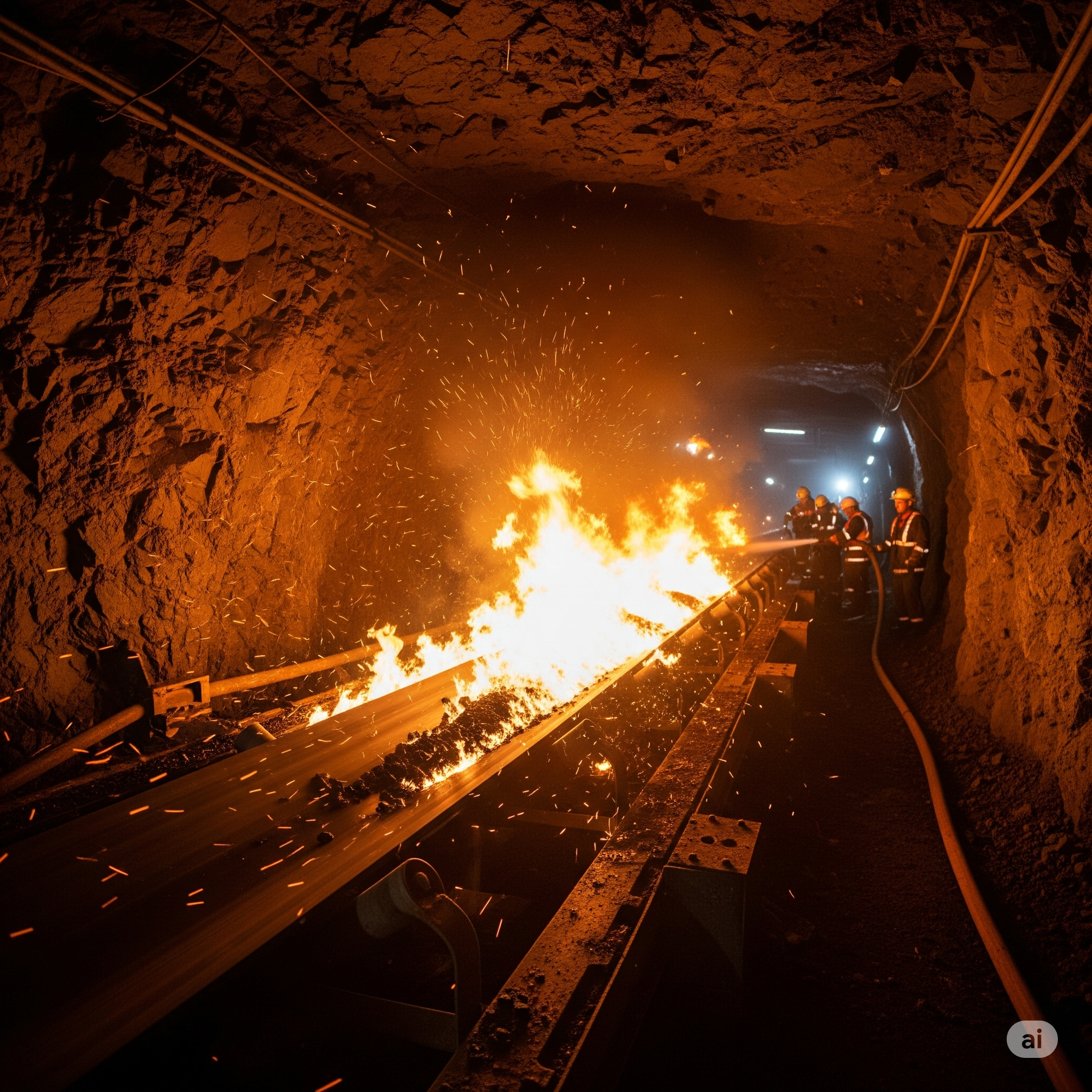
As someone deeply involved in the mining industry, I witness every day the vital role conveyor belts play in sustaining operations—tirelessly transporting ore from the heart of the mine to processing facilities. These systems are the backbone of productivity, operating round the clock and under extreme conditions. Yet, beneath their mechanical reliability lies a critical and often overlooked hazard: the risk of fire. In underground mining environments, where confined spaces, combustible materials, and limited escape routes converge, a conveyor belt fire can escalate into a full-blown catastrophe within moments.
Recent incidents underscore the seriousness of this threat. The MCL (Mahanadi Coalfields Limited) coal mine in Talcher, Odisha, experienced a conveyor belt fire in early February 2025. Media reports indicated towards a short circuit as the cause of fire. The incident primarily affected a conveyor belt near the compressor house, causing damage to machinery and disrupting coal transportation. In the same month a fire erupted around 5 PM at Cochin Port's Q10 berth. This blaze occurred when a conveyor belt, used by Fertilizers And Chemicals Travancore Limited (FACT) to transport sulfur from ships, caught fire. Fire officers quickly contained the blaze. Detailed investigation is still in progress.
These cases are not isolated—they reflect a recurring safety concern across mining and industrial operations. This article explores the causes, consequences, and prevention strategies surrounding conveyor belt fires, emphasizing the urgent need for awareness, routine inspection, and robust fire protection systems.
1. Seized or Damaged Rollers:When rollers or idlers seize or become damaged, often due to bearing failure or material buildup, they can generate excessive heat through friction. This heat can build up and eventually ignite the conveyor belt or nearby combustible materials.
2. Belt Slippage:If the conveyor belt slips over a pulley or drum, it can create significant friction and heat. This can occur due to overloading, poor tension, or wet conditions, and can lead to ignition of the belt or surrounding materials.
3. Misaligned Belts:When a conveyor belt is not properly aligned, it can rub against metal frameworks or support structures, generating heat and increasing the risk of fire.
4. Overheating Components: Mechanical stress or poor lubrication can cause bearings, motors, or other components to overheat. If these components are surrounded by combustible materials, it can lead to a fire.
5. Friction Brake Issues:Friction brakes used on conveyor systems can generate significant heat if not properly maintained or if they are engaged during operation. This heat can increase the risk of fire, particularly in environments with combustible materials.
1. Conveyor Belt Materials:Although modern conveyor belts are designed to be flame-retardant, they are still constructed from materials that can burn, such as PVC, rubber, or synthetic polymers. When exposed to sufficient heat, these materials can ignite and sustain a fire.
2. Combustible Dust:In industries like coal mining, fine dust particles can accumulate on structural components of conveyor or become airborne in poorly ventilated areas. These dust particles can ignite and even explode if exposed to sparks or heat.
3. Material Carryback and Spillage: When materials stick to the conveyor belt or spill around transfer points, they can create flammable deposits. If these deposits are exposed to heat, sparks, or friction, they can ignite and fuel a fire.
4. Lubricants and Fluids:Conveyor systems often rely on lubricants and hydraulic fluids to operate smoothly. However, if these fluids leak or are not properly managed, they can become a fuel source for fires, increasing the risk of ignition and spread.
1. Hot Work Activities:Sparks from welding or cutting near conveyor belts, can ignite nearby dust or belt material. Without proper hot work permits and fire watches, such activities are highly dangerous.
2. Electrical Faults:Short circuits, faulty wiring, overloaded circuits, or damaged electrical components associated with the conveyor motor or controls can generate sparks or excessive heat, igniting nearby combustibles.
3. Spontaneous Combustion: Certain types of coal are prone to spontaneous heating due to oxidation, especially when stored or transported in poorly ventilated areas. When these hotspots come in contact with conveyor belts or dust, ignition can occur.
4. Foreign Objects:Metal pieces caught in the system can cause sparks when they jam or strike moving parts.
1. Enclosed Conveyor Systems:While enclosed systems are designed to contain dust and debris, they can also trap heat and combustible particles there by creating an environment where fires spreads quickly.
2. High-Temperature Environments:In certain industries, such as coal mining, conveyor systems may operate in high-temperature environments. If the conveyor belts are not designed to withstand these conditions, there is a risk of spontaneous ignition, particularly if the belts are not rated for high temperatures.
Unsafe work habits, like dropping a lit cigarette, neglecting maintenance protocols, performing hot work near active belts without proper precautions, inadequate housekeeping, lack of proper training, bypassing safety protocols or ignoring known hazards, can directly lead to fire incidents.
1. Inspect and replace worn-out rollers, bearings, and misaligned belts.
2. Ensure proper lubrication to prevent overheating of components.
1. Regular Cleaning:Implement a strict schedule for cleaning accumulated dust, fines, and spilled material from the conveyor structure, rollers, idlers, and surrounding areas.
2. Belt Cleaning Systems:Install and maintain effective primary and secondary belt cleaners (scrapers) to minimize carryback and prevent material buildup on the return side of the belt.
3. Dust Suppression/Collection:Utilize water sprays, fogging systems, or dust collection systems at transfer points and other dust-generating areas to control airborne dust, especially with highly combustible materials like coal.
4. Spillage Control: Implement measures to prevent spillage, such as proper belt loading, skirt board sealing, and ensuring correct belt tension.
1. Utilize belts manufactured to stringent international standards (e.g., ISO 340, EN 12882, MSHA 30, AS 4606 in relevant regions, and Indian Standards like IS 8598:1998 and IS 7155:1986). These belts are designed to self-extinguish quickly and resist ignition, significantly limiting fire spread.
2. Ensure belts have anti-static properties (e.g., conforming to EN ISO 284) to prevent the build-up of static electricity, which can act as an ignition source, especially in dusty environments
1. Linear Heat Detection Cables:Install linear heat detection cables along the entire length of the conveyor, especially in enclosed or underground sections. These cables can detect localized hot spots before a full-blown fire erupts.
2. Thermal Imaging Cameras:Deploy thermal cameras at critical points (e.g., drive heads, transfer points) to continuously monitor temperatures and identify overheating components.
1. Emergency Response Plan:Develop and regularly update a comprehensive fire emergency response plan specifically for conveyor belt fires. This should include evacuation procedures, communication protocols, and firefighting strategies.
2. Training:Conduct regular trainings for all personnel on topics such as use of fire extinguishers, emergency shutdown procedures, evacuation routes and assembly points.
Thus through a multi-faceted approach, integrating technological innovation, stringent operational protocols, and a strong safety culture, can the mining sector effectively safeguard its operations and workforce from the threat of conveyor system fires.
With a very different concept, the magazine received tremendous and positive response. Passive Fire Safe India is the first magazine covering the Passive Fire segment. Passive fire protection involves Read More..
© Passive Fire Safe India. 2026 All Rights Reserved. Designed by VMH Web Solutions