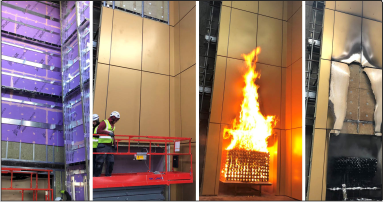
In modern construction, safety and performance are equally important. Fireproof boards and panels have become indispensable elements in passive fire protection, offering both strength and resistance to fire. With technological advances, today’s fireproof boards go far beyond basic protection, supporting design flexibility, sustainability, and compliance with international safety standards.
TYPES OF FIREPROOF BOARDS
- Gypsum boards: Lightweight, easy to install, widely used in partition walls.
- Calcium silicate boards: Provide durability and moisture resistance along with fire Protection.
- Cement boards: Strong, heavy-duty, and suitable for industrial applications.
- Magnesium oxide boards: Eco-friendly and versatile for various construction needs.
- Composite panels: Blend fireproof materials with insulation for multi-functional performance.
INNOVATIONS IN FIREPROOF PANELS
Recent innovations have transformed fireproof boards into high-performance construction materials. Manufacturers now integrate nanotechnology, lightweight composites, and eco-friendly binders to enhance fire resistance. Some advanced panels are designed to resist not only fire but also moisture, pests, and sound transmission. These multi-functional boards allow architects and engineers to design structures that are safe, energy-efficient, and environmentally responsible.
Applications Across Sectors Residential buildings: Used in walls, ceilings, and flooring systems for added safety.
- Commercial Complexes: Panels support fire-rated partitions, false ceilings, and cladding.
- Industrial Plants: Heavy-duty boards protect structural steel and machinery zones.
- Public Infrastructure Airports, metro stations, and hospitals benefit from durable fire-rated panels.
These applications highlight the flexibility of fireproof boards across sectors, balancing protection with performance.
BENIFITS OF FIREPROOF BOARDS
One of the most significant benefits is their ability to maintain compartmentation in the event of a fire. By resisting flames and heat, they help prevent structural collapse, allowing occupants more time to evacuate. Additionally, modern boards are lightweight, easy to install, and compatible with existing construction methods, reducing both cost and time of installation.
STANDARDS AND CERTIFICATIONS
- EN 13501 (European standard for fire classification).
- ASTM E119 (Standard test methods for fire resistance).
- IS Codes(Indian standards for passive fire safety).
Third-party certification ensures quality, reliability, and performance during actual fire events.
CHALLENGES IN ADOPTION
Despite their benefits, fireproof boards face challenges in adoption, particularly in cost-sensitive markets like India. Builders often choose cheaper, non-rated alternatives that compromise safety. Lack of awareness among end-users and limited enforcement of building codes also hinder widespread use. Proper education and strict regulatory oversight are essential for broader adoption.
FUTURE OUTLOOK
- Integration of sustainable raw materials for eco-friendly construction.
- Development of smart fireproof panels with sensors to monitor temperature and integrity.
- Wider use in modular and prefabricated construction systems.
- Improved aesthetic finishes to blend safety with modern design.
CONCLUSION
Fireproof boards and panels are more than just protective barriers; they are essential for building resilience. As innovation drives better performance and sustainability, these materials will continue to play a central role in construction safety. Investing in certified, high-quality fireproof boards ensures compliance, saves lives, and creates safer built environments.