Trending
Directory
Time :




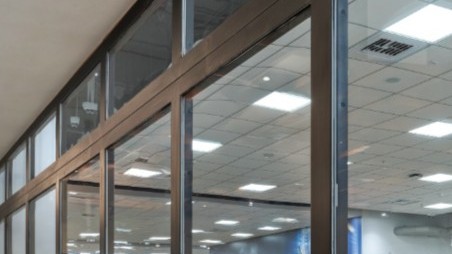
Fire-resistant glass represents the critical intersection of modern architectural aesthetics and rigorous life-safety engineering. In an era where designers favour open, light-filled spaces, the traditional reliance on thick masonry walls for fire separation has shifted toward transparent partitions. However, this transition requires a deep understanding of how glass behaves under extreme thermal stress.
Unlike standard windows, fire-resistant glass is a specialized component of a building’s passive fire protection strategy, designed to act as a barrier against the spread of flames, toxic smoke, and radiant heat. Its primary purpose is compartmentation, which ensures that a fire starting in one area is contained long enough for occupants to evacuate and for emergency responders to arrive.
To appreciate the necessity of fire-resistant glass, one must understand why common glass types are insufficient in an emergency. Standard annealed glass, the kind found in most residential windows, is highly susceptible to thermal shock. When a fire begins, the centre of the glass heats rapidly while the edges, shielded by the frame, remain cool. This uneven expansion causes the glass to crack and fall out in as little as two minutes.
Tempered or toughened glass, while significantly stronger and more resistant to impact, is still not a fire-rated material. Once its thermal limit is reached, it shatters into thousands of small fragments, leaving a complete void that allows fire and smoke to bypass the barrier instantly.
Similarly, standard laminated glass contains a plastic interlayer that is highly flammable; it melts and fuels the fire, causing the glass to delaminate and collapse. Fire-resistant glass is engineered to avoid these failures, maintaining its structural integrity for 30, 60, or even 120 minutes.
The technology behind fire-rated glazing generally follows two distinct paths: monolithic and interlayered systems.
Monolithic fire glass is a single pane of glass that has undergone specialized chemical or thermal treatments to withstand high temperatures. While it is excellent at providing integrity—meaning it prevents flames and smoke from passing through—it does not stop the transmission of radiant heat. On the other side of such glass, the heat can be intense enough to ignite furniture or cause severe burns.
Interlayered glass, on the other hand, is a sophisticated multi-layered “sandwich” containing a clear, fire-resistant gel. When exposed to fire, the layer facing the heat shatters, and the gel reacts by expanding into a thick, opaque, and rigid foam. This foam creates a powerful insulation shield that blocks the fire and keeps the “safe side” of the glass cool, meeting the highest safety standards for heat insulation.
A vital but frequently overlooked feature of these systems is bi-directional fire resistance. This refers to the ability of the glass to provide the same level of protection regardless of which side the fire originates from.
In most building layouts, such as office partitions or hospital corridors, a fire could start in a room or in the hallway. Bi-directional glass is symmetrically tested to ensure safety from both sides. This is a critical distinction because some fire-rated products are uni-directional, meaning they are only certified to face a fire from one specific direction.
The use of uni-directional glass presents significant challenges and dangers in real-world applications. The most immediate risk is human error during installation; if a contractor accidentally installs uni-directional glass facing the wrong way, the fire protection of that entire wall is compromised.
Furthermore, if a fire occurs on the “unprotected” side of such glass, it may fail almost immediately, shattering or allowing deadly radiant heat to pass through. This can lead to the spontaneous ignition of materials on the supposedly safe side of the partition.
In many jurisdictions, including under the National Building Code of India, installing glass that does not offer equal protection from both sides is a violation of safety standards. This not only puts lives at risk but also exposes developers and architects to severe legal and financial liability.
Ultimately, fire-resistant glass is a silent guardian within the built environment. It allows for the transparency we desire in modern design without sacrificing the safety we require for survival.
By moving beyond simple “safety glass” and insisting on high-quality, bi-directional, and interlayered systems, we ensure that our buildings remain resilient. In the context of fire safety, glass must be viewed as more than just a decorative element; it is a life-saving barrier that turns a potential chimney into a fortress of protection.
Investing in the correct fire-rated glazing is a commitment to the long-term safety of every person who walks through the building's doors.
Article Contributed By:
Mr. Magesh S.
AIS Consumer Glass Solutions
With a very different concept, the magazine received tremendous and positive response. Passive Fire Safe India is the first magazine covering the Passive Fire segment. Passive fire protection involves Read More..
© Passive Fire Safe India. 2026 All Rights Reserved. Designed by VMH Web Solutions