Trending
Directory
Time :




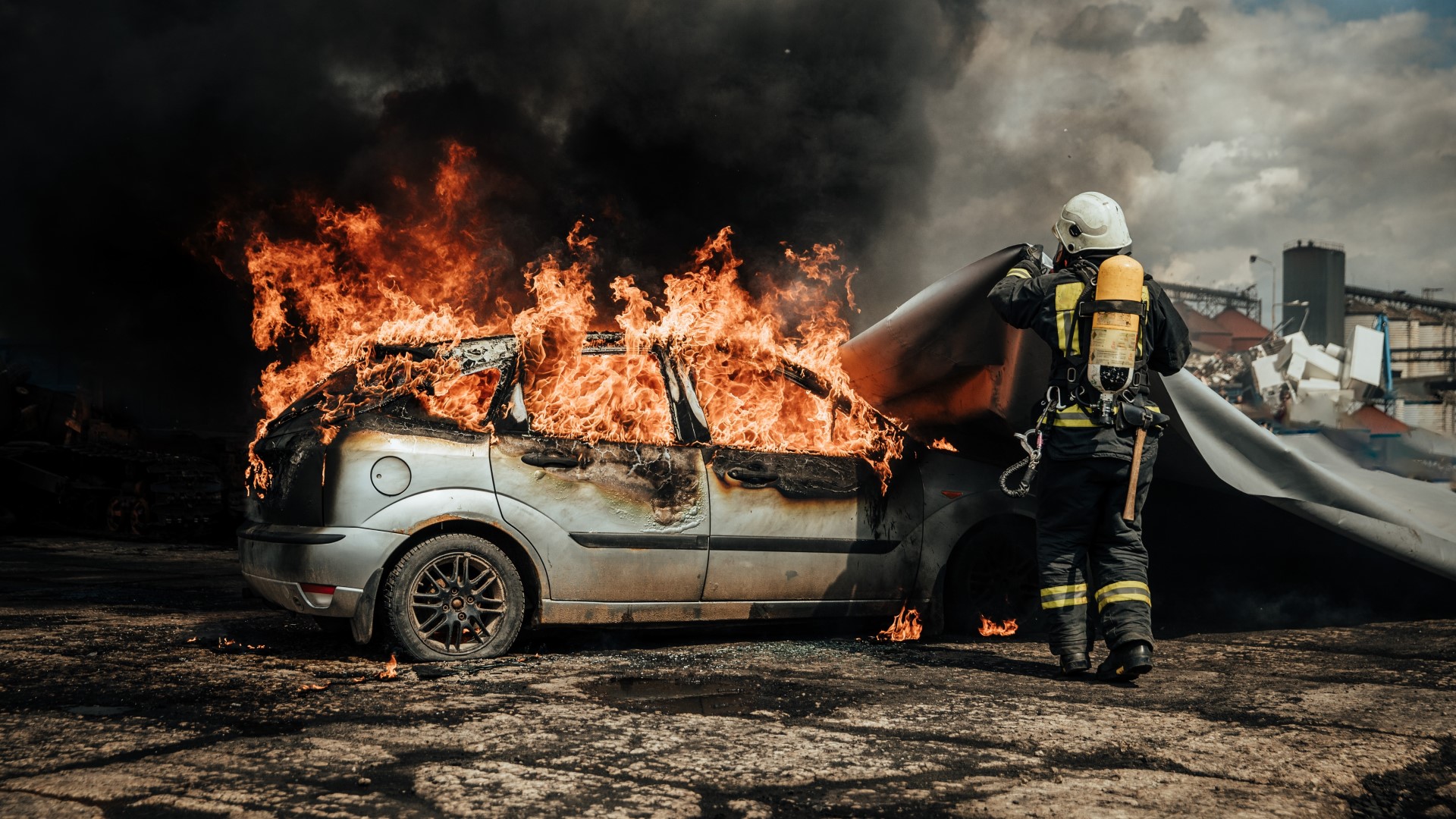
Over the last 20 or so years, lithium-ion battery (LiB) powered devices have infiltrated our day to day lives through the devices that rely on them for energy storage including phones, cordless tools, toys, wristwatches, and vehicles. With the meteoric rise in popularity of LiBs in society, failures due to misuse, mishandling, or a poor understanding of necessary safety features may be expected. This study quantifies the fire hazard of a seated E-scooter with a LiB in thermal runaway during overcharging. Lithium-ion batteries (LIBs) have been extensively used in electronic devices, electric vehicles, and energy storage systems due to their high energy density, environmental friendliness, and longevity. However, LIBs are sensitive to environmental conditions and prone to thermal runaway (TR), fire, and even explosion under conditions of mechanical, electrical, and/or thermal abuse. These unpredictable hazardous consequences significantly limit the commercial applications of LIBs. Thus, these safety issues need to be urgently addressed. In this review, the TR mechanisms and fire characteristics of LIBs are systematically discussed. Battery thermal safety monitoring methods, including the traditional technologies such as temperature, voltage, and gas sensors, as well as the latest new technologies such as optical fiber sensors and ultrasonic imaging, are summarized. A battery thermal management system (BTMS) based on various cooling methods and new insights into the BTMS are briefly presented. According to the fire characteristics of LIBs, nonaqueous and water-based fire extinguishing agents are comprehensively summarized and compared, and the concept of an intelligent fire protection system is discussed. Based on the analysis of the thermal safety issues for preventing possible TRs and for extinguishing an already uncontrollable fire, a complete set of solutions for the thermal safety of LIBs is proposed. In this review, integrated strategies for intelligent detection and fire suppression of LIBs are presented and can provide theoretical guidance for key material design and intellectual safety systems to promote wide application of LIBs.
Two serious electric vehicle (EV) fire incidents one in the USA and one in Norway have recently highlighted a dangerous misuse of EV fire blankets. In both cases, water was introduced under the blanket, leading to explosions.
Recently, two serious incidents occurred due to incorrect use of fire blanket – where water was used under the blanket – resulting in explosions. These incidents deviate from our procedures and do not represent Bridgehill’s safety protocols. Scientific literature has thoroughly documented that introducing water into environments containing flammable gases, particularly those released during thermal runaway of lithium-ion batteries, can significantly worsen the risk of fire and explosion. This is due to several chemical and physical reactions triggered by water interacting with battery components and released gases.
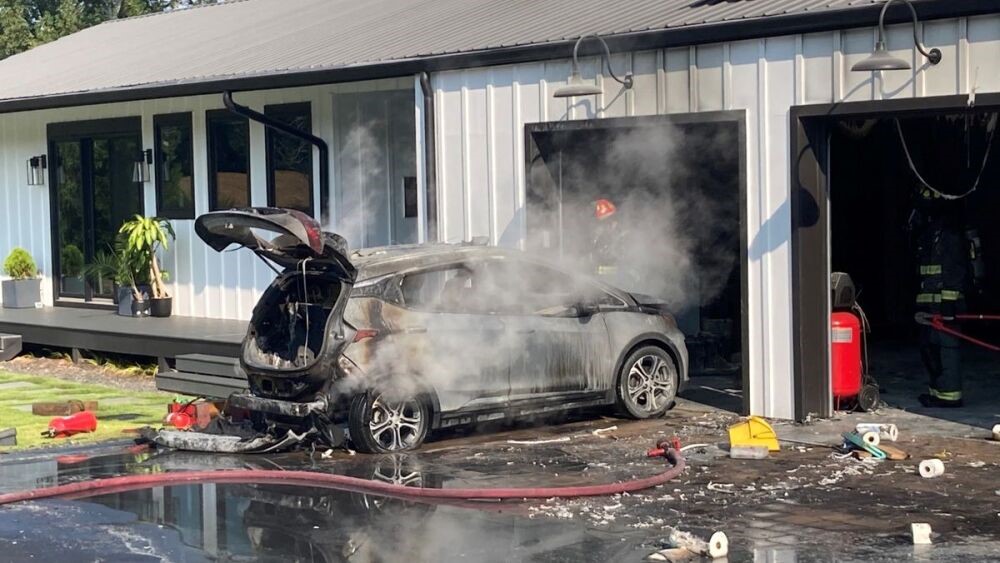
The Fire Protection Research Foundation (FPRF), the research affiliate of NFPA, and the Fire Safety Research Institute, part of UL Research Institutes, shared that recent experiments determined that the deployment of a fire blanket eliminated flaming by denying oxygen to the vehicle and the battery fire; however, battery thermal runaway propagation continued after blanket deployment, which resulted in the continued release and accumulation of flammable battery gases into the volume under the blanket. In some of the experiments, this accumulation of flammable gases under the blankets presented an explosion risk to firefighters operating near the vehicle.
During thermal runaway, lithium-ion batteries can emit various flammable and toxic gases, including hydrogen, methane, and carbon monoxide. When water is introduced, it may react with exposed lithium or other reactive battery components, leading to the generation of hydrogen gas. Hydrogen is extremely flammable and, when mixed with oxygen, forms an explosive mixture known as 'oxyhydrogen'. This mixture can ignite at relatively low temperatures and energy levels, dramatically increasing the risk of explosion.
The organizations noted that these initial experiments reinforce the need for continued research on EV firefighting tactics — and some related research is already underway.
FPRF is conducting research to improve the safety of firefighters responding to EV fires and incidents by assessing current firefighting tactics and tools used by the fire service to manage EV incidents and the impact of suppression activities on managing re-ignition risks. Recent experiments for the Assessment of EV Firefighting Tactics, Tools and the Impact on Stranded Energy research project were conducted to assess the ability of four firefighting tactics to suppress and establish control of fire incidents involving standalone EV battery packs and full EVs with confirmed battery pack fire involvement:
NBC provides comprehensive guidelines on fire prevention, including design, materials, and construction methodologies. Part 4 mandates fire compartmentalization, fire doors, firestops, and other PFP elements.
The goal is to raise awareness and understanding of the correct use of the fire blanket – to prevent similar situations from recurring.
During thermal runaway, gases such as hydrogen (H₂), methane (CH₄), and carbon monoxide (CO) are released, which may cause fire or explosion. https://mozees.no/phd-blog-why-do-lithium-ion-batteries-catch-fire-or-explode/
Water can react with battery components and generate hydrogen gas... creating an explosive mixture when combined with air. https://www.ufinebattery.com/blog/can-lithium-batteries-be-in-the-water/
Lithium reacts with water to produce hydrogen gas, which is highly flammable... increasing the risk of explosion.
https://poweringautos.com/can-water-put-out-a-lithium-ion-battery-fire/?utm_
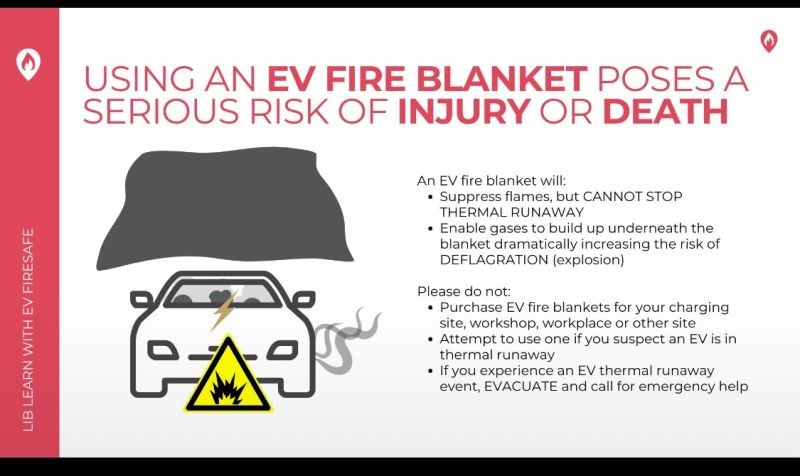
Using water in the oxygen-poor environment under the fire blanket can cause:
It is important to understand that the fire blanket does not extinguish the EV battery itself. The blanket isolates the fire and immediately eliminates about 80% of the fire, which mainly come from burning plastics and other organic materials. These are extinguished almost instantly.
The battery may still continue to burn. But once the organic materials no longer burn, the temperature around the battery decreases. This can prevent or slow propagation between battery cells, meaning the fire develops more slowly and eventually stops earlier than if the vehicle were fully engulfed.
Some of OEM has also developed a new solution to prevent fire from spreading between battery modules. This technology is designed to make batteries produced significantly safer in the future.
There is a need to align standards and procedures for global use of fire blankets. I am available to help establish this to ensure safe usage worldwide. There are several unserious actors trying to implement water use as part of their procedure without proper knowledge & using seams and fabrics that do not meet the high quality needed for an EV fire. It is difficult to discern who is serious and who is not. Even certification bodies exploit this trend by creating their own certifications for profit. Here we also see a lack of expertise.
With a very different concept, the magazine received tremendous and positive response. Passive Fire Safe India is the first magazine covering the Passive Fire segment. Passive fire protection involves Read More..
© Passive Fire Safe India. 2026 All Rights Reserved. Designed by VMH Web Solutions