



Lithium-Ion Battery Storage Facilities: Why Passive Fire Protection Must Evolve?
The global shift toward electric mobility, renewable energy integration, and high density battery installations has created a transformative energy landscape. Lithiumion battery storage systems now power everything from EV charging stations and data centers to grid scale energy storage facilities. While the technology enables cleaner and more reliable power, it also introduces a new and complex fire hazard: thermal runaway. These fires behave very differently from conventional building fires, making it urgent for Passive Fire Protection (PFP) systems to evolve beyond traditional solutions. As India accelerates its electric transition, the need for future ready passive fire designs has become critical to ensuring safety and resilience in battery intensive infrastructure.
At the core of lithiumion battery hazards is the phenomenon of thermal runaway a chain reaction in which failed cells rapidly release heat, gases, and flames. Once triggered, often due to mechanical damage, overheating, internal short circuits, or manufacturing defects, thermal runaway can spread from a single cell to an entire battery pack within seconds. Unlike typical Class A structural fires, lithium battery fires burn at extremely high temperatures, generate toxic gases, and can reignite even after being extinguished. This complexity significantly challenges firefighters, active suppression systems, and conventional protective barriers. As a result, passive fire protection must act as the first line of defense, isolating fire spread and reducing fire intensity before active systems engage.
Historically, battery rooms and electrical installations were safeguarded using standard fire rated walls, enclosures, and insulation materials. However, thermal runaway incidents in high capacity storage facilities have demonstrated that conventional fire resistance ratings often fail under prolonged high temperature exposure. Modern lithium battery fires can exceed temperatures of 1100°C, surpassing the endurance limits of many traditional assemblies. Consequently, industry experts now emphasize engineered compartmentation systems designed not only to contain fire, but also to withstand explosive pressures, rapid temperature rise, and corrosive gases generated during battery failure events.
The first evolutionary step in passive fire protection involves advanced fire resistant materials. Intumescent coatings and wraps tailored for battery environments must activate rapidly, expanding into dense protective char layers that block heat transfer. Cementitious fireproofing materials must be reformulated to withstand extreme thermal shock and prevent spalling under sudden heat surges. High-performance boards infused with mineral fibers, ceramic composites, or calcium silicate formulations are increasingly used in battery storage walls, enclosures, and ceilings to provide superior heat resistance. Some engineered passive barriers also integrate fireproof insulation that resists chemical degradation from hydrofluoric acid and other corrosive by-products released during battery fire events.
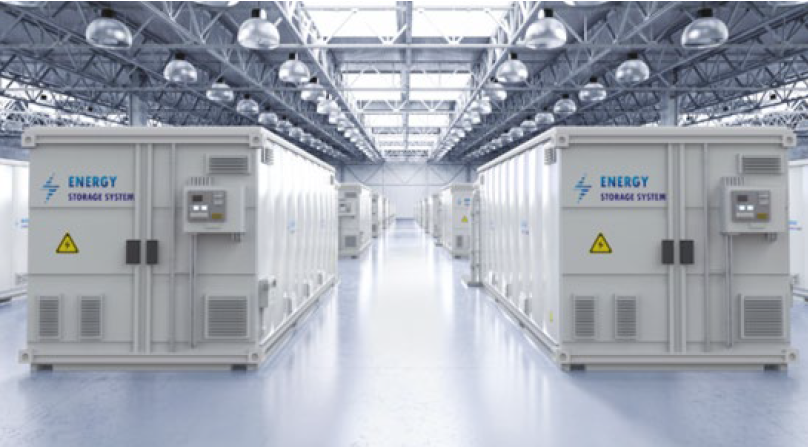
Another major shift is the rise of fire rated modular enclosures and prefabricated Battery Energy Storage System (BESS) containers. These systems are designed with internal fire separation walls, pressure relief panels, and gas extraction ducts to manage both fire and explosion risks. Rather than relying solely on surrounding building structures, these enclosures function as autonomous passive fire zones. Each container acts as a micro compartment capable of isolating incidents without exposing adjacent systems or structures. India’s rapidly expanding EV charging ecosystem, especially in dense urban areas, increasingly depends on such modular defensive designs.
Ventilation and smoke management strategies have also become a critical component of evolving passive fire protection. Thermal runaway releases flammable gases such as hydrogen, methane, and carbon monoxide, which can trigger secondary explosions if not managed properly. Passive ventilation systems must be engineered to safely release pressure while preventing flame spread. Fire dampers, fire rated ducts, and smoke containment assemblies must be upgraded to withstand corrosive gases and sudden high temperature blasts. In underground EV parking facilities, passive smoke barriers combined with engineered exhaust paths are essential to prevent smoke migration into occupied spaces.
Compartmentation principles themselves require refinement in lithium centric environments. Traditional compartmentation focuses on limiting fire spread between rooms or floors, but battery storage demands a more granular approach. Micro compartmentation separating racks, modules, and battery clusters with narrow fire resistant barriers is emerging as a best practice. This strategy slows thermal propagation, interrupts cell to cell transmission, and provides valuable time for detection and suppression systems to operate. Passive fire stopping for cable penetrations, conduits, HVAC openings, and electrical raceways must also be enhanced using materials capable of resisting extreme heat and corrosive effluents generated during battery fires.
Regulatory frameworks in India are evolving but remain in early stages when it comes to battery specific passive fire safety. International standards such as NFPA 855, FM Global guidelines, and UL 9540A testing provide strong reference benchmarks. UL 9540A, in particular, focuses on understanding how heat, flames, and gases propagate during battery failure events knowledge that is critical for designing passive fire barriers with accurate performance thresholds. Indian regulations are expected to adopt similar methodologies as battery installations become more widespread.
With the growth of smart infrastructure, passive fire systems are also beginning to integrate digital intelligence. Emerging solutions embed temperature sensors, gas detectors, and thermal mapping technologies directly into fire barriers and enclosures. These “smart passive fire systems” can detect early cell heating, activate ventilation pathways, close fire dampers, or issue alerts before thermal runaway fully develops. This fusion of passive resilience and intelligent monitoring represents the next milestone in fire safety for battery-driven environments.
Looking ahead, passive fire protection must be incorporated at the earliest planning stages of battery facilities not treated as an afterthought. Architects, fire engineers, electrical designers, and safety consultants must collaborate to address the unique challenges of lithium based energy storage. Future fire resistant materials and compartmentation strategies must also consider next generation battery chemistries, including solid state batteries, sodiumion technologies, and increasingly dense EV battery packs.
As India accelerates its transition toward renewable energy integration and electric mobility, fire safety infrastructure must advance in parallel. Lithium ion battery fires are fundamentally different, and passive fire protection systems must reflect this reality. Evolving materials, intelligent compartmentation, engineered ventilation, and battery specific regulatory frameworks will form the foundation of safer, future ready energy ecosystems. Passive fire protection is no longer just a compliance requirement it has become a critical engineering pillar in India’s energy transition.